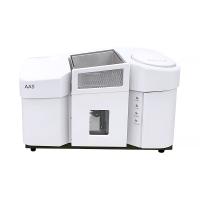
Sodium and potassium contents in white liquor and green liquor can be determined by flame atomic absorption spectroscopy (FAAS) or inductively coupled plasma atomic emission spectroscopy (ICP-AES).
The specific measurement steps are as follows:
FAAS method:
The sodium, potassium and other ionic elements in the sample to be tested are converted into measurable cationic forms through acid treatment.
The sample is transferred to a flame atomic absorption spectrometer, and the metal ions in the sample are converted into ground state atoms by the flame.
Use the standard solution of the corresponding metal ion to calibrate at an appropriate wavelength, and determine the concentration of the metal ion in the sample to be tested by comparing the absorbance.
ICP-AES method:
The sodium, potassium and other ionic elements in the sample to be tested are converted into measurable cationic forms through acid treatment.
Passing the sample through a nebulizer creates fine droplets and produces a plasma emission spectrum in a high temperature plasma.
At the corresponding wavelength, by comparing the intensity of the emission spectrum of the sample to be tested with the intensity of the standard solution, the concentration of sodium, potassium and other ionic elements in the sample is determined.
Beichao reminds you: before analysis, it is necessary to remove suspended solids and other interferences through sample pretreatment to ensure the accuracy of the measurement.