Partial repair painting refers to the repair paint in the following situations:
If the car is partially damaged due to a traffic accident or a collision with an obstacle, repaint the part or component that has been repaired by sheet metal;
Partial surface of the car body or the coating of the parts are damaged early due to corrosion or blistering, and repair coating is required;
Due to various reasons, the color of the car body is partially aged or discolored, and repair painting is required.
The basic process and operation content of partial repair painting are as follows:
1. Preparation
Remove parts that affect sheet metal and painting operations;
Reshape the damaged part or replace it with a new one.
2. Surface treatment before painting
Peel off or shovel off the surface coating of sheet metal trimming parts;
Make the edge interface, and grind off the thickness difference between the surface of the steel plate and the broken edge of the coating film, so that the repaired part can be smoothly ;
Blow or wipe off dirt and sanding dust;
Wipe away oil and fingerprints with solvent.
3. Apply primer, scrape putty, and level the surface to be repaired
Brush the self-drying synthetic resin primer on the exposed metal surface;
Natural drying or forced drying of the primer layer with an infrared radiator;
Scrape and apply self-drying oily putty or polyester putty on the surface of the sheet metal trimming part;
Dry naturally or forcefully dry the putty layer with an infrared radiator; (related instrument: time drying Tester)
Manual or mechanical grinding to eliminate unevenness;
Wet sanding to eliminate sanding marks;
Check whether the unevenness of the surface is eliminated. If the requirements are not met, repeat the puttying and grinding procedures until the surface is smooth;
Wash and dry to remove dirt, sanding dust and moisture;
Wipe off the oil on the sanded surface.
4. Spray the intermediate coating (if the surface requirements are not high, this process can be omitted)
Cover untouched surfaces with protective covers or paper;
Spray the secondary paste 2~3 times;
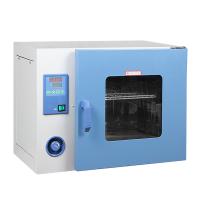
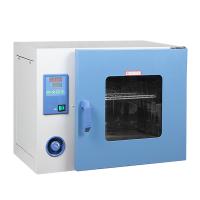
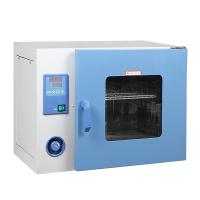
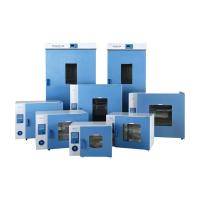
Natural drying or forced drying; (related equipment: oven)
Partially scrape and apply quick-drying nitro putty to fill small holes and smooth sandpaper scratches;
Use 320~500 water-resistant sandpaper for manual wet sanding to improve the bonding force between the putty layer and the topcoat;
Wash, wipe, and dry.
5. Preparation before painting topcoat
Cover the parts that are not covered with topcoat with sticky paper;
Wipe the surface to be coated to remove dust and oil;
Prepare topcoat (color and viscosity).
6. Spray topcoat
Spray 2~3 coats of topcoat (spray 2 coats of synthetic resin topcoat, spray 3~4 coats of nitro topcoat);
Air dry or force dry. (Related instrument: oven)
7. Finishing work
Remove the protective paper and wipe the surface;
If the touch-up finish has polishing properties (nitro finish, alkyd finish), polish with polishing slurry to eliminate touch-up ghosting and improve decorativeness, then wipe off with polishing water;
Assembling parts removed before refinishing;
Clean and check the quality of touch-up paint.