Epoxy viscosity refers to the difficulty of epoxy resin flowing at a specific temperature, and is usually used to measure the viscosity or fluidity of epoxy resin. Measuring the viscosity of an epoxy resin can help determine its suitable process conditions and best way to use it.
To measure the viscosity of epoxy resins, it is usually necessary to use a viscometer. During the test, a certain amount of epoxy resin needs to be placed in the test tank of the viscometer, and then the flow behavior of the epoxy resin is observed by rotating or vibrating the viscometer, and the measurement results are recorded. Usually, the unit of viscosity is Pascal second (Pa·s) or milliPascal second (mPa·s).
The viscosity of epoxy resin can be affected by many factors, such as temperature, ambient humidity, composition and ratio of epoxy resin, etc. Therefore, when conducting viscosity testing, it is necessary to pay attention to controlling these factors to ensure the accuracy and repeatability of the test results.
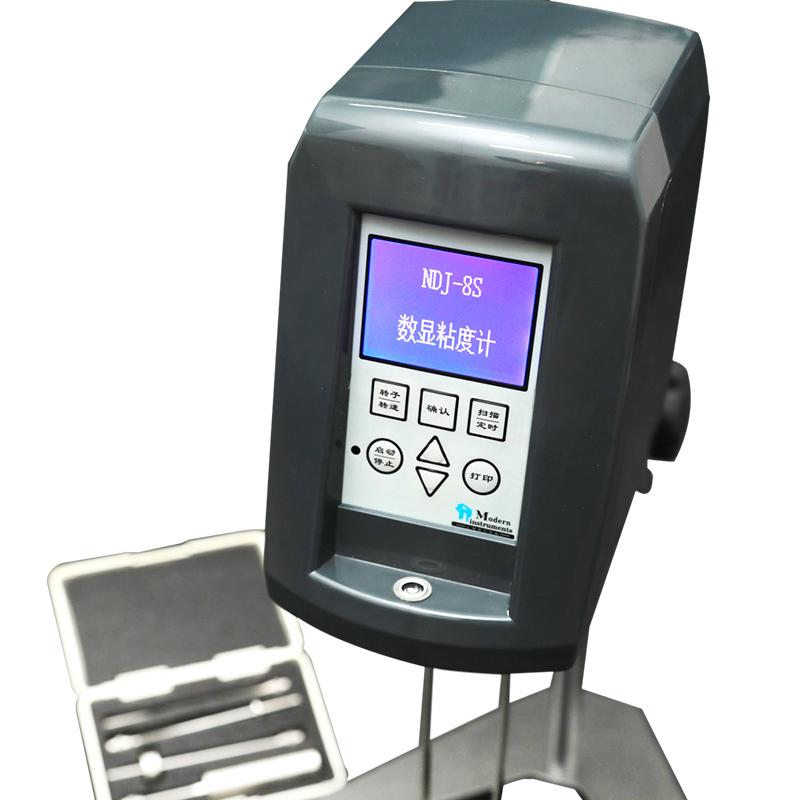
The Rotational Viscometer is widely used in the detection of epoxy resin, mainly used to detect the fluidity and viscosity of epoxy resin to control the quality and performance of the product.
The following are the basic steps of the Rotational Viscometer in the detection of epoxy resin:
Sample preparation: Stir the epoxy resin sample to be tested evenly and bring it to the required temperature.
Instrument preparation: turn on the Rotational Viscometer, adjust the temperature and rotation speed, and calibrate the zero point.
Sample test: inject the sample into the viscometer, pay attention to avoid the generation of air bubbles, record the reading, and record the time and temperature. Repeat the test three times and take the average value.
Data processing: Calculate the viscosity value of the sample according to the readings obtained from the experiment, and perform data analysis.
NBCHAO reminds you: when testing epoxy resin, you should pay attention to the temperature and stirring time of the sample to ensure the uniformity and stability of the sample. In addition, for different types of epoxy resins, the measurement conditions and data processing methods may also be different, which need to be adjusted according to the actual situation. At the same time, when using a Rotational Viscometer to detect epoxy resin, attention should also be paid to the maintenance and maintenance of the instrument to ensure the accuracy and stability of the test results.