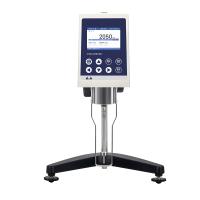
The measurement of food viscosity can help to evaluate the physical properties of food, such as viscosity, fluidity, mouthfeel and mouthfeel texture, etc. The viscosity of food is closely related to its taste and quality. For some foods that require consistency, such as jam, sauce, cream, batter, etc., proper viscosity can make it have a good texture and taste, and it is easy to stir, inject or spread. On the contrary, if the viscosity of the food is too high or too low, it will affect its eating effect and taste experience.
Specific applications such as Rotational Viscometers can be used to measure the viscosity of peanut butter to evaluate quality indicators such as mouthfeel and texture. By measuring the viscosity of peanut butter, it can help to adjust the production process, so as to produce peanut butter products with a suitable taste. The Rotational Viscometer is a widely used viscosity testing instrument in the food industry, and it can be used to measure the viscosity of various foods besides peanut butter. The following is the application of Rotational Viscometer in peanut butter viscosity detection and its detection steps:
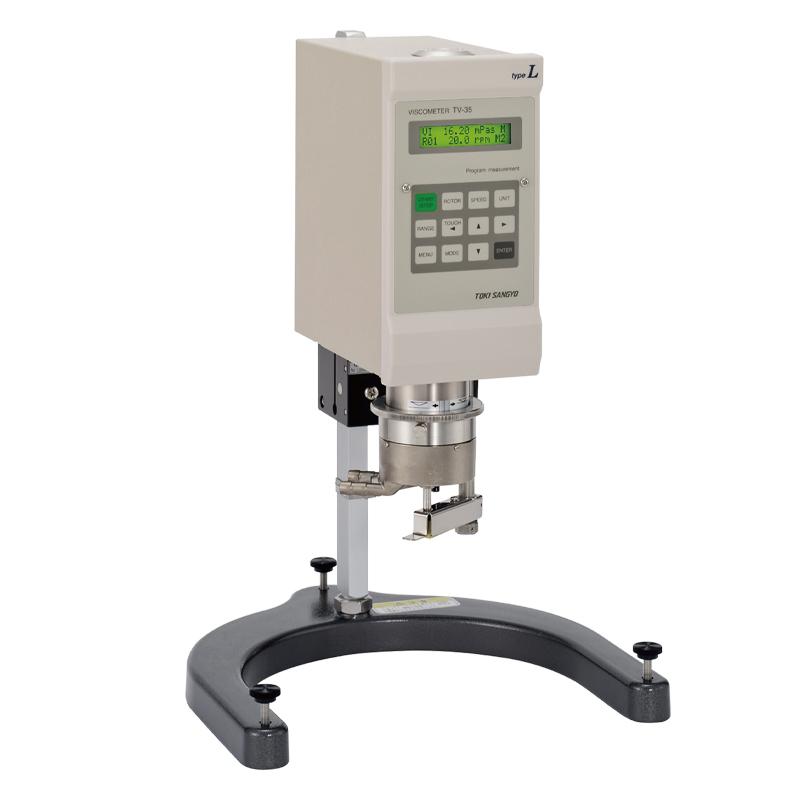
Detection steps
Prepare the test sample: Take a certain amount of peanut butter sample and place it in the Rotational Viscometer test cup.
Adjust the Rotational Viscometer: adjust it to the correct test parameters according to the instructions of the Rotational Viscometer. Usually includes rotation speed, temperature and test time, etc.
Measuring the viscosity of peanut butter: start the rotary viscometer, let it automatically rotate for a certain period of time and stop, and record the test results. NBCHAO reminds you: When measuring the viscosity of peanut butter, you can use multiple rotation speeds for testing in order to obtain more comprehensive data.
Analysis results: analyze the taste and texture of peanut butter according to the test results, and compare with the standard requirements to judge whether the peanut butter meets the quality requirements. North and South Chao reminds you: When analyzing the results, the influence of factors such as the oil content and moisture content of the peanut butter on the viscosity should also be considered.
Clean the Rotational Viscometer: After the test, clean the Rotational Viscometer in time to prevent the next test result from being polluted.
When using a Rotational Viscometer to test peanut butter, Beichao reminds you to choose the appropriate rotational speed and test temperature, and make corrections and calibrations according to the actual situation. At the same time, care should be taken to avoid the influence of air bubbles and particulate matter in the sample on the test results. Additionally, due to the high oil content of peanut butter, special cleaning and maintenance of the Rotational Viscometer may be required during testing.