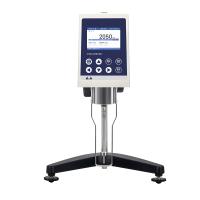
Screen printing ink is a widely used printing material, usually used to print logos, texts, patterns and images, etc. In the silk screen printing process, the viscosity of the ink is an important parameter, which affects the printing quality and production efficiency.
If the viscosity of the ink is too low, it will cause the ink to flow too fast during the printing process, resulting in distorted, unclear or missing patterns or images. However, if the viscosity of the ink is too high, it will cause the ink to flow too slowly during the printing process, making it difficult to adhere to the printing material, resulting in poor printing or stagnation. Therefore, by measuring the viscosity of screen printing ink, the fluidity and adhesion of the ink can be ensured, and then high-quality printed products can be obtained.
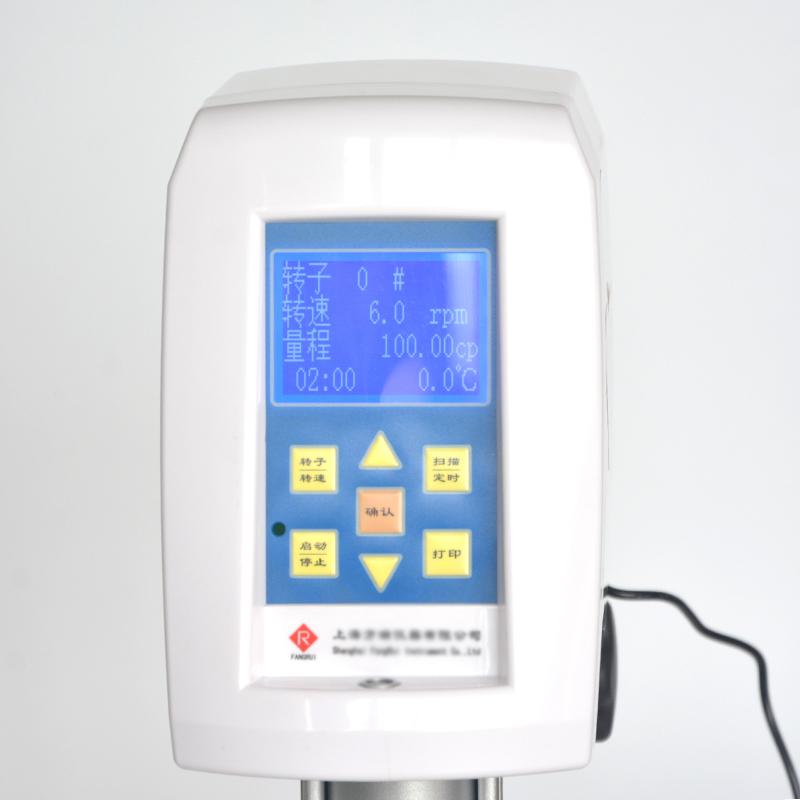
The Rotational Viscometer is also one of the commonly used instruments in the viscosity detection of screen printing inks. The principle is to determine the viscosity of the ink by measuring the resistance of the ink to flow on the surface of a rotating cylinder.
The following are the steps to detect the viscosity of screen printing ink using a Rotational Viscometer:
Prepare the sample: Stir the screen printing ink sample to be tested evenly, and pour it into the sample cell of the Rotational Viscometer.
Adjust the temperature: adjust the temperature of the Rotational Viscometer according to the specifications of the ink.
Adjust the rotation speed: according to the viscosity range of the ink, select the appropriate rotation speed.
Start the test: Start the Rotational Viscometer and wait a few minutes until a stable reading appears.
Record the results: Record the reading on the Rotational Viscometer and compare it to the ink specification.
NBCHAO reminds you: Before performing the Rotational Viscometer test, the instrument needs to be calibrated to ensure the accuracy of the test results. In addition, when using a Rotational Viscometer for testing, it is necessary to strictly follow the instructions of the instrument to avoid damage to the instrument or inaccurate test results. In addition, for high-viscosity screen printing ink samples, it is recommended to heat them to the specified temperature before testing, so that the test results will be more accurate.