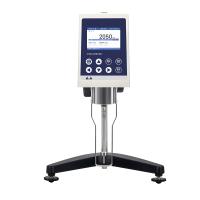
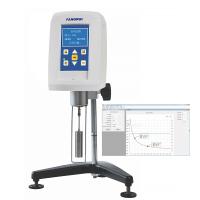
Rubber solution is a common polymer solution, and its viscosity is an important factor affecting its performance. In the process of rubber production and processing, it is necessary to accurately control the viscosity of the rubber solution to ensure its performance and quality. The Rotational Viscometer can measure the viscosity of the rubber solution and the rheological properties of the solution under shear force, such as the influence of the shear rate on the viscosity. By measuring the viscosity of the rubber solution, the quality of the rubber can be controlled to ensure its performance during production and processing.
Rotational viscometer is a commonly used rubber solution viscosity testing instrument, which has a wide range of applications, including various types of rubber solutions.
Detection steps:
Prepare rubber solution samples: Take a certain amount of rubber solution samples from the production site or rubber barrels, and stir them well.
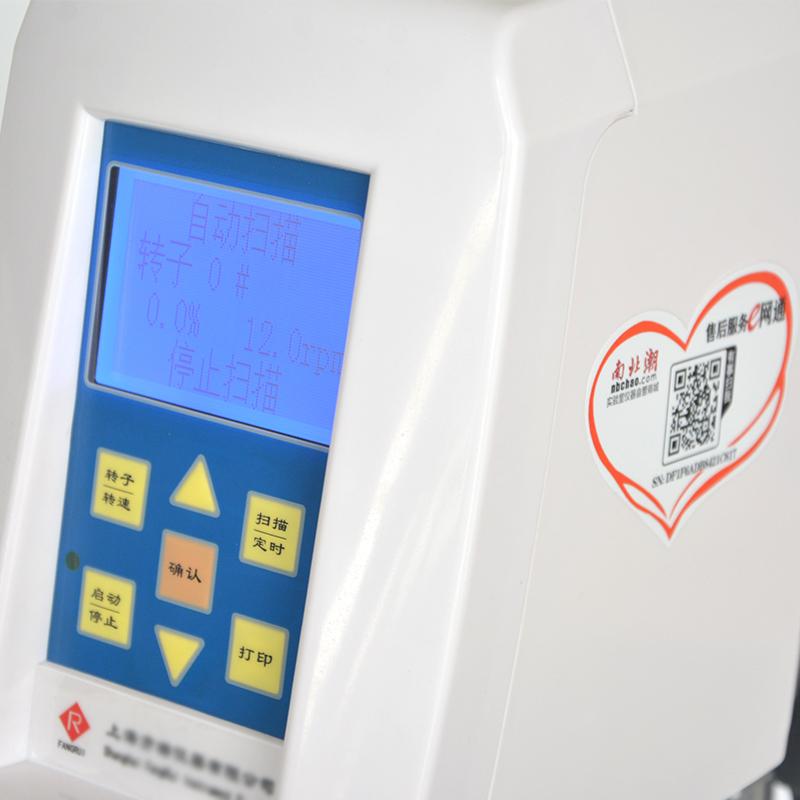
Prepare Rotational Viscometer: According to the properties of the rubber solution and testing requirements, select a suitable Rotational Viscometer, and install the measuring head and rotor.
Preparations before measurement: turn on the power of the viscometer, and adjust the instrument parameters, such as rotation speed, temperature, etc., according to the instrument manual.
Start the measurement: pour the rubber solution sample into the test cup of the Rotational Viscometer, and use a needle to remove air bubbles to make the surface of the rubber solution flat. Slowly put the rotor into the rubber solution, wait for the rubber solution to stop fluctuating, and start the Rotational Viscometer to start measurement.
Record data: The Rotational Viscometer will automatically record the measurement data, including viscosity value, rotational speed, temperature, etc.
Analyzing data: According to the measurement results, analyze the rheological properties, viscosity and other information of the rubber solution to control the quality of the rubber and optimize the production process.