Putty is a commonly used caulking material in construction. It is often used to fill gaps and cracks in building structures such as walls, floors and roofs to improve the airtightness and thermal insulation of buildings. The viscosity of a putty can be measured for several reasons:
Determining Putty Properties: Measuring the putty's viscosity can help determine properties such as the putty's flow and plasticity to ensure it can effectively fill gaps and cracks, and improve its sealing and heat-retaining properties.
Control construction quality: Measuring the viscosity of putty can help construction personnel control construction quality. If the viscosity of the putty is too high, it may be difficult to apply; if it is too low, it may result in incomplete caulking. By measuring the viscosity, applicators can adjust the viscosity of the putty to ensure a good caulking effect.
Adjusting Putty Formulation: Measuring the viscosity of a putty can help to adjust the putty formulation to meet specific application needs. If the viscosity is too high, more thinner or water may need to be added; if the viscosity is too low, more granular material or fillers may need to be added.
Improve production efficiency: Measuring the viscosity of putty can help producers determine better production process parameters, such as mixing time, temperature and humidity and other parameters. By adjusting these parameters, production efficiency can be increased and product quality can be optimized.
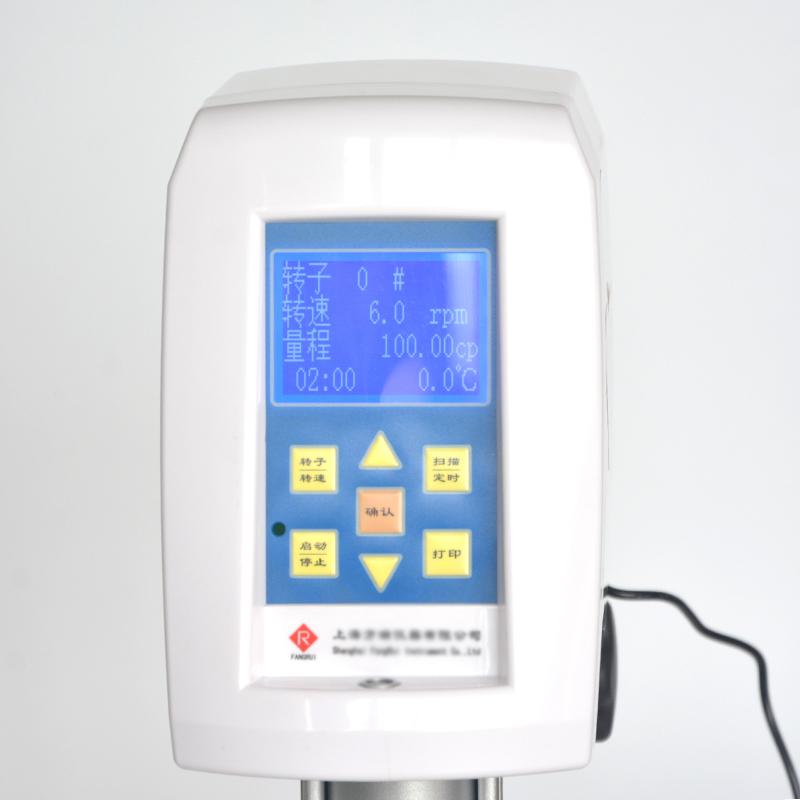
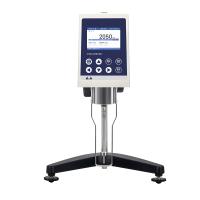
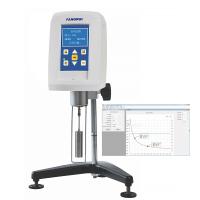
Rotational viscometer is also a commonly used instrument in putty viscosity testing. Putty viscosity refers to the viscosity of the putty liquid, which is usually used to evaluate the coating performance and construction performance of putty. The Rotational Viscometer can be used to measure the viscosity of putty. The principle is to determine the viscosity of putty by measuring the resistance of putty to flow on the surface of rotating cylinder.
The following are the steps for testing the viscosity of putty using a Rotational Viscometer:
Prepare the sample: Stir the putty liquid to be tested evenly and pour it into the sample cell of the Rotational Viscometer.
Adjust the temperature: adjust the temperature of the Rotational Viscometer according to the specifications of the putty.
Adjust the rotation speed: according to the viscosity range of the putty, select the appropriate rotation speed.
Start the test: Start the Rotational Viscometer and wait a few minutes until a stable reading appears.
Record Results: Record the reading on the Rotational Viscometer and compare to the putty specification.
NBCHAO reminds you: Before performing the Rotational Viscometer test, the instrument needs to be calibrated to ensure the accuracy of the test results. In addition, when using a Rotational Viscometer for testing, it is necessary to strictly follow the instructions of the instrument to avoid damage to the instrument or inaccurate test results. For putty samples, since its viscosity is related to factors such as its solid concentration, solvent type and additives, it is necessary to understand the physical and chemical properties of the sample before testing. If it is necessary to compare and analyze different characteristics of different putties, tests under different conditions can be carried out as required, such as different solid concentrations, different solvent types and different additives.