Rotational viscometers can also be used to measure tar viscosity. Tar viscosity refers to the tar's resistance to flow and is commonly used to evaluate the tar's fluidity and coating properties. The principle of using a Rotational Viscometer to measure the viscosity of tar is similar to that of other liquids, that is, the viscosity of tar is determined by measuring the resistance to flow on the surface of a rotating cylinder.
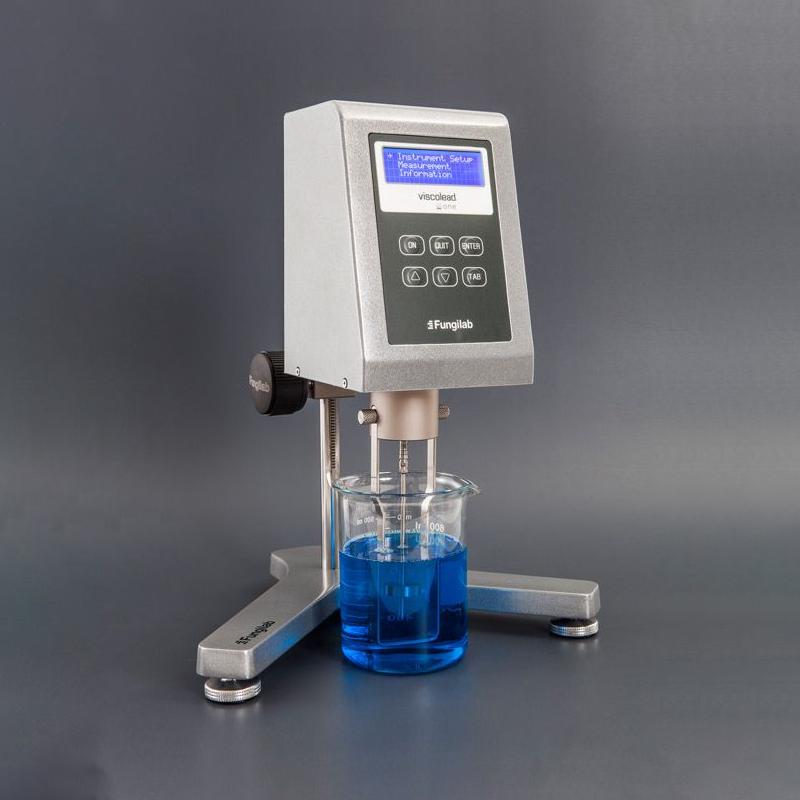
The following are the steps for tar viscosity testing using a Rotational Viscometer:
Sample preparation: Take the tar sample to be tested and let it stand at room temperature until it reaches a uniform state.
Prepare the sample: According to the requirements of the Rotational Viscometer, take a certain amount of tar sample and put it into the sample pool of the Rotational Viscometer.
Adjust temperature: Adjust the temperature of the Rotational Viscometer according to the specifications of the tar, usually at room temperature.
Adjust the rotation speed: According to the viscosity range of the tar, select the appropriate rotation speed, usually around 100rpm for testing.
Start the test: Start the Rotational Viscometer and wait a few minutes until a stable reading appears.
Document the results: Record the reading on the Rotational Viscometer and compare to the tar specification.
NBCHAO reminds you: Before performing the Rotational Viscometer test, the instrument needs to be calibrated to ensure the accuracy of the test results. In addition, when using a Rotational Viscometer for testing, it is necessary to strictly follow the instructions of the instrument to avoid damage to the instrument or inaccurate test results. For the tar sample, its viscosity is related to factors such as its solid content, heating temperature and quality, so it is necessary to understand the physical and chemical properties of the sample before testing. If it is necessary to compare and analyze different properties of different tars, tests under different conditions can be carried out as required, such as different solid content and different heating temperatures, etc.