1 Definition, Purpose and Significance
2 Relevant standards
GBT/T 1721_79(89) Determination of appearance and transparency of varnishes, varnishes and thinners
HG/T3379-2003 perchlorethylene thinner appendix A transparency determination
3 Introduction to key points of inspection methods
3.1 GB/T 1721_79(88) Method for Determination of Appearance and Transparency of Varnish, Varnish and Thinner
3.1.1 Determination of appearance
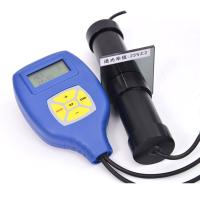
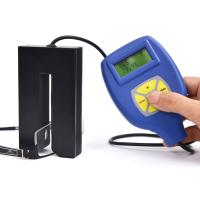
At a certain temperature, visually observe whether the sample contains mechanical impurities under the transmitted light in the dark box. (Related instrument: light transmittance meter)
3.1.2 Determination of transparency
At a certain temperature, visually compare with a series of standard solutions of different degrees of turbidity under the transmitted light in the dark box to evaluate the transparency of the sample.
3.1.3 Materials and equipment
Stoppered colorimetric tube: capacity 25ml
Wooden dark box: 500x400x600mm as shown in Figure 4
Transparency standard liquid: divided into colorless part and colored part.
3.1.4 Operation points
3.1.4.1 Determination of appearance
Put the sample into a clean colorless glass colorimetric tube with a capacity of 25ml, adjust the temperature to (23±2)°C, and observe whether the sample contains mechanical impurities under the transmitted light in the dark box.
3.1.4.2 Determination of transparency
Put the sample into a dry and clean colorimetric glass tube with a capacity of 25ml, adjust the temperature to (23t2)°C, and compare it with a series of standard solutions of different turbidity (colorless) under the transmitted light in the dark box. The colorless part is used for comparison, and the colored part is used for comparison, and the nearest primary standard solution of the sample is selected.
3.1.5 Result presentation
3.1.5.1 Appearance By visual comparison, evaluate whether the sample contains mechanical impurities.
3.1.5.2 Transparency standard liquid is divided into three grades, which are transparent, slightly turbid and turbid, namely grades 1, 2 and 3 in the standard. The transparency level of the sample is directly expressed by the level of the closest primary standard solution.
3.1.6 Precautions
3.1.6.1 The standard solution should be kept properly and protected from light. The valid period of use is six months.
3.1 6.2 During the test, if the standard solution is found to have cotton-like suspended solids or sediment, it should be shaken evenly and then compared with the sample.
3.1.6.3 During measurement, if the sample is turbid due to low hand temperature, it can be heated to (50-55)°C on a Water Bath, kept for 5 minutes, then cooled to (23±2)°C, and then measured .
3.1.6.4 Before the measurement, the appearance of the colorimetric tube containing the sample should be transparent and clear, otherwise the test result will be affected.
3.2 HG/T3379-2003 Perchlorethylene Thinner Appendix A Determination of Transparency
3.2.1 Principle
Use the instrument to measure the transparency value, and judge the transparency level of the sample based on this value.
3.2.2 Materials and instruments
Copper mesh: 150µm-180µm.
Transparency Tester: the transparency grade is 20~100, and the measurement accuracy is 2%.
3.2.3 Operation points
3.2.3.1 Turn on the power of the instrument.
3.2.3.2 Close the cover of the measuring port of the instrument and adjust the calibration knob to make the display value of the instrument 100%.
3.2.3.3 Stir the sample evenly, use a 150-180µm copper mesh to transition, pour the filtered sample into a dry and clean liquid tank, the height of the liquid is not less than four-fifths of the tank height. Insert the liquid tank into the measuring port, close the cover, and read the value displayed by the instrument. When taking the liquid tank, only touch the opaque side of the liquid tank with your hands, and keep the transparent side clean.
3.2.4 Result presentation
3.2.4.1 Measure twice in parallel, if the difference between the two measurement results is not greater than 2, take the average of the two measurement results.
3.2.4.2 Judge the level of transparency according to Table 1.