1 Definition, Purpose and Significance

2 related standards
GB/T1724-79(89) Determination of paint fineness
GB/T6753.1-86 Determination of Grinding Fineness of Coatings
Is015242000 Determination of fineness of grind for paints, varnishes and printing inks
3 Key points of inspection methods
3.1 GB/T1724-79 (89) Determination of paint fineness
3.1.1 Test Principle
Mix the sample fully and evenly, use a small paint knife to drop the sample into the deepest part (uppermost) of the scraper fineness gauge, and use both hands to scrape the scraper from the uppermost end of the scraper group meter at a vertical speed. , within the specified time, angle and minimum graduation line, observe the uniform exposure of the particles to the light, and finally judge the fineness of the paint.
3.1.2 Materials and equipment
Ink knife.
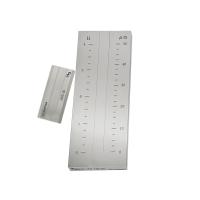
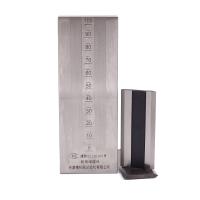
Scraper Fineness Meter: the mileage is 0~50 microns, 0-100 microns, 0-150 microns.
3.1.3 Operation points
Firstly, predict the sample to select the Fineness Meter with the most suitable range. If the fineness is ≤.30µm, a Fineness Meter with a range of 0-50µm should be selected; when the fineness is 31-70µm, a Fineness Meter with a range of 0-100µm should be selected; when the fineness is above 70µm, a Fineness Meter with a range of 0-150µm should be selected Fineness meter. Clean and dry the fineness gauge with a solvent, then use a small paint knife to fully stir the sample, then drop 2~3 drops of the sample into the uppermost end of the micrometer, and scrape it from top to bottom within 3 seconds. Then, within 5 seconds, make the line of sight and the board surface form an angle of 15-30 degrees, observe the particles evenly exposed to the light, and record the reading.
3.1.4 Result presentation
Within the range between the fineness reading and the adjacent graduation line, there should be no more than three grains, and three parallel measurements were taken, and the same reading was taken twice as a result. 3.2G] Determination of grinding fineness of 1i/T6753.1-86 paint
3.2.1 Test Principle
Stir the sample well, use a small paint knife to drop the sample into the deepest part (uppermost) of the scraper fineness gauge for a few drops, and scrape it vertically from the uppermost end of the scraper group fineness gauge with both hands , within the specified time, angle and minimum graduation line, observe the uniform exposure of the particles to the light, and finally judge the fineness of the paint.
3.2.2 Materials and equipment
Ink knife
Scraper Gauge
3.2.3 Operation points
Firstly, the sample is predicted to select the Fineness Meter with the most suitable measuring range. If the fineness is in the range of 40-90µm, you should choose a Fineness Meter with a range of 100µm. If the fineness is in the range of 15-40µm, you should choose a Fineness Meter with a range of 50; Fineness meter with a range; if the fineness is in the range of 1.5-12µm, a Fineness Meter with a range of 15µm should be selected. Clean the fineness gauge with a solvent and wipe it flat, then use a small paint knife to fully stir the sample evenly, then drop 2-3 drops of the sample into the top end of the fineness gauge, and within 1-2 seconds from top to bottom. Scrape down at a constant speed, within 3 seconds, make the line of sight and the board surface form an angle of 20-30 degrees, observe the point where the particles are densely packed against the light, and record the reading.
3.2.4 Result presentation
Observe where the dense particles appear in the sample, and look for a 3mm wide strip with no more than 5-10 apparent particles, take the upper limit reading of the strip as the fineness value, and the dispersion that appears before the dense point Particles that are not considered.
3.2.5 Factors affecting fineness determination
3.2.5.1 Representativeness of the sample: The sample should be fully stirred before the test, and a representative sample should be taken out.
3.2.5.2 Viscosity of the tested paint liquid: Generally, the viscosity is inversely proportional to the fineness, because the low viscosity causes the solvent to volatilize quickly, so that the particles are easily exposed.
3.2.5.3 Solvent volatilization speed: The solvent volatilization speed is fast, and the measured fineness value is relatively high
3.2.5.4 Reading time: The reading time is long, and the fineness value is relatively high. Because the solvent volatilizes and the grains gradually become prominent, it should be read within the specified time.
3.2.5.5 Air bubbles: Because the sample is stirred before the test, the air will often be brought into the paint, so that the air bubbles will appear on the fineness gauge, resulting in reading errors, so the sample after stirring should be placed for a while before testing .
3.2.5.6 After the measurement, the scraper fineness gauge must be scrubbed and dried, especially for water-based paints, so as not to affect the use of the fineness gauge due to surface corrosion.
3.2.5.7 The scraper is slightly softer than the fineness gauge, and the scraper is susceptible to wear after long-term use, resulting in inaccurate measured values, so the scraper should be checked before use.
3.3IS01524:2000 Determination of Grinding Fineness of Paints, Varnishes and Printing Inks
Compared with GB/T6753.1-86, this standard increases the scope of application of the standard, including paints, varnishes and printing inks; cancels the fineness plate with a range of (0-15) µm; cancels the inspection groove Depth method: cancel the clear regulation of the reading time after scraping the sample, and only require the reading as soon as possible. The requirements and operation steps of other groups of gauges are basically the same.