1 Substrate treatment
The choice of substrate is determined according to the requirements of the product or method standard.
1.1 Purpose
Improve the adhesion of the coating film to the sample; Avoid the influence of different substrate conditions on the test results. Only the same. The test results obtained under the same test conditions are comparable.
1.2 Relevant Standards
GBIT 9271-88 Standard Test Plate for Paints and Varnishes
1.3 Introduction to the key points of the method
This standard specifies the standard test plates used in the general test methods for basecoats, varnishes and related products, as well as the surface treatment procedures before painting.
The standard lists the material requirements and treatment methods for seven substrates. The seven substrates are steel plate, tinplate plate, plate, glass plate, asbestos mixed board, hard fiberboard, and gypsum board. The first five substrates are commonly used in the current test.
L.3.1 Steel plates
Material requirements Ordinary collar meets the requirements of GB912; Good steel plate meets GB710 requirements.
There are three treatment methods listed in the standard: solvent cleaning, grinding (polishing) and blast cleaning. The commonly used method is the standard 3.4, that is, the grinding (grinding) method, and the processing steps are as follows:
Under normal circumstances, the surface layer is removed by dry grinding with No. 400 water sandpaper (the thickness of the surface layer removed in the standard should not be less than 0.7μm), washed with solvent, wiped dry, and placed in a dryer.
Grinding procedure:
Grind straight and evenly in parallel directions along one side of the test plate;
Straight and evenly grinding back and forth in a direction perpendicular to the first direction until the surface layer is ground off;
Polishing in a circular motion with a diameter of about 80~100mm until the circumference formed on the surface overlaps.
1.3.2 Tinplate
Material requirements: in line with GB2520 requirements.
There are two types of treatment listed in the standard: solvent cleaning and grinding (polishing). The commonly used method is the standard 4.3, that is, the grinding (grinding) method, and the processing steps are as follows:
Under normal circumstances, use 500 water sandpaper to grind and polish, the grinding procedure is the same as 1.3.1, but it is required that there shall not be a plating layer on the test board to be completely ground off, and after polishing, it is cleaned with solvent, wiped dry, and placed in the sub-mill.
1.3.3 Aluminium plates
Material requirements: in line with GB3880 requirements.
There are three treatment methods listed in the standard: solvent cleaning, grinding (polishing) and acid chromate.
1.3.4 Glass panes
Material requirements: meet GB11614 requirements.
There are two treatment methods listed in the standard: solvent cleaning method and detergent cleaning method.
When using the detergent cleaning method to treat the sample, in general, wash it with soapy water, rinse it with clean water, dry it naturally or blow it at low temperature, and then put it in a hand dryer.
1.3.5 Asbestos cement board
Material requirements: meet the requirements of JC/T412-1991 asbestos water-mixed slab for construction.
The treatment steps are as follows: wipe off the dust on the test board, immerse it in water for a week, change the water every day to make the pH of the test board close to 10, remove the mud on the surface, polish the surface with No. 0 abrasive cloth or No. 200 water sandpaper to make it smooth, rinse it with water, and dry it at constant temperature and humidity for more than a week.
2 Plate making method
2.1 Purpose and Significance
To evaluate the various properties of the coating film, it is first necessary to prepare the coating film that meets the requirements of the inspection standard, that is, the coating film with uniform and appropriate thickness. The prepared coating film should be able to truly reflect the essence of the coating film, even if there are defects, but it should not be due to external reasons, such as preparation. environment, and the essence of the coating film has changed.
2.2 Relevant Standards
GB/T1727-92 general preparation method for paint film
JG/T23-2001 Preparation of architectural coating test plate
GB/T 1765-79 (89) Preparation method for determining damp heat resistance, salt resistance and weather resistance
GB/T 1727-92 is an applicable method in the above standard, and its content has included the methods specified in several other standards. This criterion is mainly described below.
2.3 Introduction to the main points of the method
This standard stipulates the materials for the preparation of general paint film, the surface treatment of the substrate, the method of making the board, the drying and state adjustment of the paint film, and the requirements for the thickness of the paint film of various coatings.
2.3.1 Instruments and appliances
Paint brushes
Spray gun
Scraper
viscometer
stopwatch
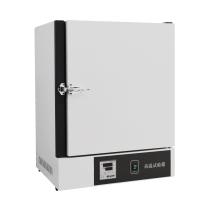
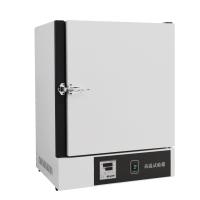
Constant temperature and humidity Test Chamber
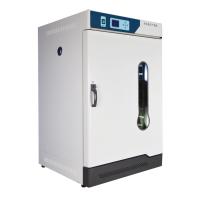
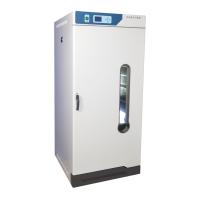
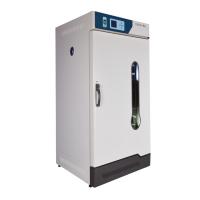
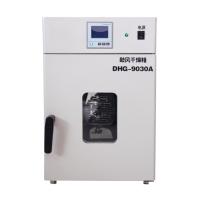
Electric Forced Air Drying Oven, etc.
2.3.2 Operational Points
There are six types of board making methods listed in this standard, namely brushing, spraying, dipping, scraping, rotary lacquer applicator and pouring.
2.3.2.1 Brushing method
Dilute the sample to the appropriate viscosity or the viscosity specified in the product standard, and use a paint brush to quickly and evenly paint along the vertical and horizontal directions on the specified bottom plate to make it a uniform paint film, and no blank and overflow are allowed, and the brushed sample should be laid flat to make it dry.
The general laboratory utensils are wolf hair brushes. This method controls the thickness of the sample film by controlling the amount of brushing.
5.2 in JG/T 23-2001 is also the brush method.
2.3.2.2 Spraying method
Dilute the sample to the spraying viscosity, spray a uniform paint film on the specified test plate, there shall be no blank and overflow, the Spray Gun is not less than 200mm away from the coated surface when spraying, the spraying direction should be at such an angle with the coated surface, the air pressure is (0.2-0.4) MPa, and the gun movement speed should be uniform.
This method controls the film thickness by controlling factors such as the viscosity of the sample, the speed of the Spray Gun, and the number of spray lanes.
JG/23-2001 in 5.3 is also the spraying method, the control of the amount of spraying is carried out by weighing the quality of the plate before and after spraying.
2.3.2.3 Dip coating method
The sample is diluted to the appropriate viscosity, and then the test plate is immersed vertically in the paint liquid at a slow and uniform speed, staying for 30s, taken out at the same speed, drip dry and hanging, and after the specified time interval, the sample is inverted by 180° and dipped for the second time in the same way.
This method controls the film thickness by controlling the viscosity of the specimen.
2.3.2.4 Scraping method
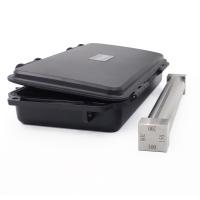
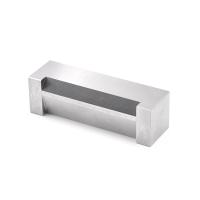
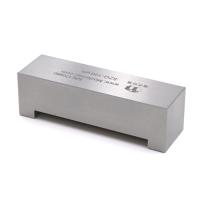
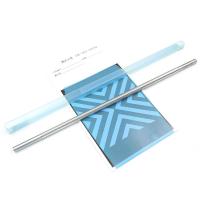
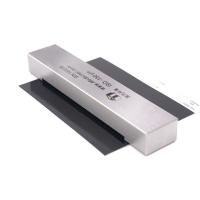
This is a method of preparing a wet film of a certain thickness by using a certain gap between the blade of the squeegee and the flat surface. Common squeegee applicators include: squeegee applicator, paint film preparer, paint Film Applicator, wire rod, etc.
5.4 in JG/T 23-2001 is also the scraping method.
2.3.2.5 Rotary lacquer applicator method
This method produces a certain thickness of paint film by controlling the viscosity of the sample, the speed of the instrument and the rotation time. The lower the viscosity of the paint, the faster the rotational speed and the longer the rotation time, the thinner the thickness of the paint film and vice versa.
2.3.2.6 Pouring method
Adjust the sample to a certain viscosity, pour it on the horizontally placed sample, and place the sample at a certain angle (40°) at an angle (10min~30min) for a period of time (10min~30min), so that the excess paint will flow out and dry at the same angle under appropriate conditions.
2.3.3 Maintenance conditions of the model
2.3.3.1 Self-lacquer
In general, the sample should be placed under constant temperature and humidity for 48 hours after inspection.
For volatile paint, the sample should be placed at constant temperature and humidity for 24 hours after inspection.
Constant temperature and humidity conditions: GB9278-88 specified temperature is (23i2)°C, relative humidity is (50i5)%.
2.3.3.2 Drying paint
In general, after making the board, it is placed in (15-30) min, and then put it into a thousand drying box, and dried according to the time and temperature specified in the product standard. The dried paint film should be tested at least (0.5-1) h at constant temperature and humidity.
3 Precautions
3.1 The way of substrate treatment will affect the determination of the performance of the sample, and attention should be paid to the selection of the treatment method and the number of abrasive cloth used.
3.2 The sample should be kept clean and not polluted when making the board.
3.3 Special attention should be paid to the inspection of the alkalinity of the test plate when dealing with the stone phase water mixed plate.