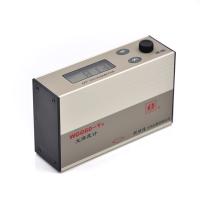
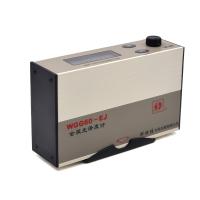
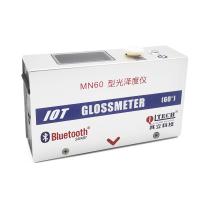
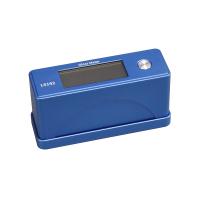
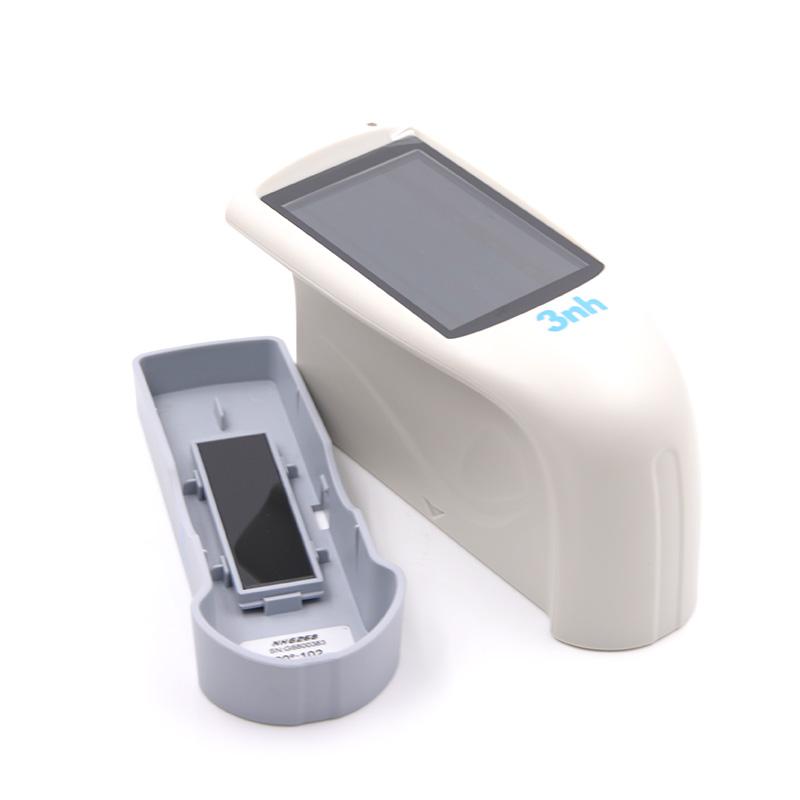
The application of gloss meter in the detection of copper gloss is used to measure the reflective gloss of the surface of copper products to evaluate its surface smoothness and quality.
Application meaning
Copper is a common metal that has good electrical and thermal conductivity and corrosion resistance. Measuring the gloss of copper materials can evaluate the light reflection ability of its surface, which in turn reflects its surface smoothness and quality. For some applications, such as making jewelry, handicrafts and decorations, the glossiness of copper materials is a very important quality indicator, because high-gloss copper products can better attract people's attention and appreciation. In addition, copper is also widely used in industries such as electronics, electrical appliances, and communications, because its electrical conductivity can meet the requirements of these fields, and the glossiness of the surface of copper materials will also affect its electrical conductivity. Therefore, measuring the gloss of copper materials can help evaluate its quality and applicability, and ensure that its use effect in different fields meets the requirements.
Detection method
The following are the measurement steps of the gloss meter in the copper gloss detection:
Prepare samples: Clean the copper products to ensure that the surface is clean and free of impurities, so as not to affect the test results.
Adjust the gloss meter: adjust and calibrate the instrument according to the instrument manual. Set the test parameters, such as angle and light source, etc.
Measure the sample: put the sample on the measuring platform, follow the instructions of the instrument, and aim the gloss meter at the surface of the sample for measurement.
Repeated measurement: In order to ensure the accuracy of the test results, the same sample can be measured multiple times, and the average value is taken as the final test result.
Record and analyze data: record the measurement results in a recording form, analyze and evaluate according to requirements.
NBCHAO reminds you: Different surface treatment methods and manufacturing processes of copper products may affect the gloss test results, so it is necessary to select the appropriate test angle and light source according to the specific situation, and make corresponding adjustments