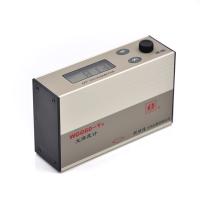
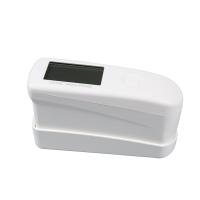
The glossiness of plastic pipes refers to the reflection ability of the pipe surface to light, which is usually measured by a gloss meter.

Application meaning
The main purpose of measuring gloss is to evaluate the appearance quality and process precision of plastic pipes, so as to ensure that they meet relevant standards and requirements. High-gloss plastic tubing enhances its visual impact and aesthetics and reflects its surface smoothness and flatness. In some applications, such as manufacturing decorative pipes, billboards, toys, etc., the appearance quality of plastic pipes is very important, and gloss is one of the important indicators. In addition, in some special industrial fields, such as medical equipment, food processing, etc., the glossiness of the pipe surface will also affect its hygienic performance and cleanliness. Therefore, measuring the gloss of plastic pipes can help evaluate their quality and applicability, and ensure that their use in different fields meets the requirements. The gloss meter can be used to measure the gloss of plastic pipes for quality inspection during production and quality control. Typically, the higher the gloss, the smoother the surface and the better the quality.

Measurement steps
Prepare the gloss meter and sample to ensure that the surface of the sample is clean and free of impurities.
Turn on the gloss meter, and select the appropriate test mode (such as 20 degree or 60 degree angle), and follow the instructions of the gloss meter to warm up or calibrate it.
Gently attach the test head of the gloss meter to the surface of the sample, and make sure that the test head is perpendicular to the surface of the sample so that it is not disturbed by external light.
Press the test button on the gloss meter, wait for the test to complete and read the test result.
If desired, multiple tests can be performed and averaged to improve test accuracy.
NBCHAO reminds you: the gloss test methods of different types of plastic pipes may be slightly different, and should be adjusted according to specific conditions. At the same time, care should be taken to prevent the surface of the sample from being damaged or polluted during the test to ensure the accuracy of the test results.