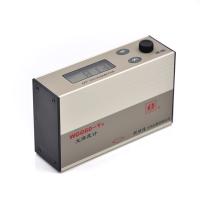
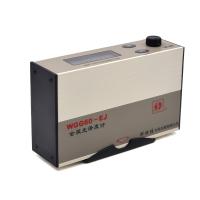
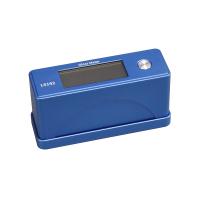
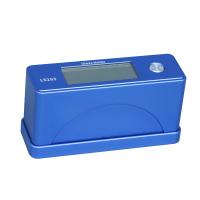
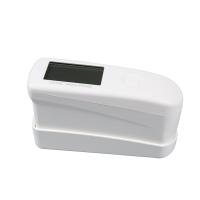
The glossiness of the surface of the glass plate refers to the intensity and direction of the reflected light on the surface, and is an important index to measure the optical quality of the surface of the glass plate. Measuring the gloss of a glass plate can evaluate its surface flatness, transparency and reflective ability to ensure that the quality of the glass plate meets the standard requirements. Gloss can be measured using a gloss meter, an instrument that measures the amount and angle of light reflected from an object's surface and generates a corresponding value. In the glass manufacturing and processing industry, measuring gloss is a common method to determine the surface quality of glass sheets, especially in applications requiring high transparency and high gloss, such as architectural glass, optical instruments, flat panel displays, etc.

Detection steps
Gloss meter can be used for gloss test of glass plate. The following are the steps of using a gloss meter to test the glossiness of a glass plate:
Prepare the sample: Take a flat sample from the surface of the glass plate to be tested and make sure that the surface of the sample is free of any scratches or stains.
Adjust the gloss meter: According to the operating instructions of the gloss meter, adjust the instrument to the appropriate test mode and light source.
Place the sample: place the glass plate sample on the gloss meter test bench, and calibrate the sample according to the instrument instructions.
Run the test: Start the gloss meter and follow the instructions in its operating instructions to run the test. During the test, it should be ensured that the instrument and the sample are in a stable state without moving or shaking.
Record the results: After the test is completed, the measurement results are recorded and analyzed. A gloss meter will provide a numerical readout, with a higher reading indicating a smoother surface and a lower reading indicating a rougher surface.
Repeat the test: To verify the accuracy of the results, the test can be repeated several times until consistent results are obtained.
NBCHAO reminds you: when testing the glossiness of glass plates, the freshness and dryness of the samples should be kept as far as possible, and the test conditions should be strictly controlled to ensure the accuracy of the test results. In addition, care should be taken to protect the surface of the sample during testing to avoid new scratches or stains