1 Definition, Purpose and Significance
The resistance of the paint film to the erosion of petroleum products (gasoline, transformer oil, lubricating oil, etc.) is called the oil resistance of the paint film.
Because some occasions where coatings are used, such as vehicles, machine tools, and chemical equipment, are often exposed to various gasoline, engine oil, and anti-lubricating oils, and electrical insulation equipment is also often exposed to various transformer oils, it is possible to cause the paint film to appear. Loss of gloss, foaming, softening, wrinkling and other damage phenomena will affect the protective effect of the coating film. By testing the oil resistance of the paint film, we can examine whether the paint film can play its due protective role in relevant practical occasions.
2 Relevant standards
HG/T3857-2006 Determination of oil resistance of insulating paint film
HG/T3343-1985 Determination of oil resistance of paint film
3 Introduction to the key points of the inspection method.
3.1 HG/T3857-2006 Determination of oil resistance of insulating paint film
3.1.1 Test principle
Immerse the painted test panel in the oil maintained at a certain temperature, observe the surface changes of the paint film after the specified time, and judge whether it meets the requirements specified in the product standard
3.1.2 Materials and equipment
Copper sheet: 50nmx100mmx(0.1-0.3)mm;
10# transformer oil;
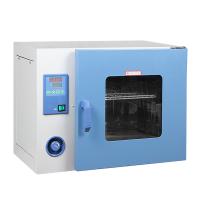
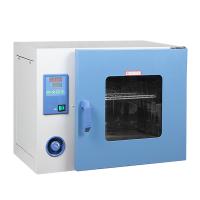
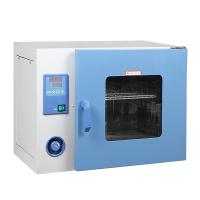
Blast constant temperature oven;
Oil container: enamel cup and other utensils.
3.1.3 Operation points
Soak half of the model in No. 10 transformer oil, and expose the other half to the air, put them together in an oven, raise the temperature to (105±2)°C (or other temperatures specified in product standards) within (25~30) minutes, and keep 24h.
Take the sample out of the oil, wipe it gently with a clean gauze, and check the surface of the paint film. .
3.1.4 Result Judgment
The surface of the paint film soaked in hand oil and the upper part of the paint film that is not soaked in oil should be smooth and smooth, without blistering, wrinkling and peeling off, and the paint film is not rubbed off by the gauze, then it is judged as qualified.
The evaluation of paint film blistering and peeling can be evaluated with reference to the provisions in GB/T 1766_1995 "Rating Method for Aging of Paint and Clearcoat Coatings".
3.2 HG/T 3343-1985 Determination of oil resistance of paint film
This standard is divided into gasoline resistance test method, transformer oil resistance test method and lubricating oil resistance test method.
3.2.1 The test principle is the same as 3.1.1.
3.2.2 Materials and instrument settings
Tinplate: 50mmx120mmx(0.2~0.3)mm;
Hard aluminum plate. 50mmx120mmx( 1~2)mm ;
Plain copper sheet: 50mmx100mn, x(0.1-0.3)mm;
Magnetic code: 500g, diameter (45±1 )mm, flat bottom surface;
Various oils: such as 120# solvent oil, RH-75 aviation gasoline, 10# transformer oil, lubricating oil, etc.;
Blast temperature oven;
Oil containers: sugar porcelain cups, glass bowls (as shown in Figure 33) and other utensils.

3.2.3 Operation points
3.2.3.1 Gasoline resistance test method
① Immersion gasoline method
After the paint film is completely dry, immerse 2/3 of the model panel in gasoline at a temperature of (23±2)°C that meets the product standards. After the specified immersion time is reached, take out the model, blot dry with a filter group, and check the surface of the paint film.
②Pour gasoline method
Under the condition of constant temperature and humidity, pour 5ml of gasoline on the sample plate, which is specified in the product standard, immediately make it cover the sample plate, and place the sample plate at 45° for 30 minutes, and then lay it flat. Put a second layer of gauze on the paint film, and then put a 500g iron block, keep it for 1min and then take it off.
3.2.3.2 Test method for resistance to transformer oil
Same as 3.1.3
3.2.3.3 Lubricating oil resistance test method
After the paint film is hard-dried, immerse the 2J'3 area of the model in lubricating oil, and the test time and temperature are in accordance with the product standards.
After the test is over, take the sample out of the oil, gently wipe off the lubricating oil with cotton gauze, wash off the remaining lubricating oil with gasoline, and leave it for 1 hour to evaporate the gasoline, and check the surface of the paint film.
3.2.4 Result Judgment
3.2.4.1 Judgment of gasoline resistance
① Judgment of the results of the gasoline immersion method
Check the phenomenon of discoloration, loss of gloss, blistering, peeling, softening, wrinkling and other phenomena on the surface of the paint film, and no less than two samples comply with the product standard as qualified. The 0.5cm wide parts above and below the immersion boundary are not used for endpoint observation and judgment.
The evaluation of discoloration, loss of gloss, blistering, peeling and other phenomena can be carried out with reference to the provisions in GB/T 1766-1995 "Rating method for aging of paint and varnish coatings". ② Judgment of the result of pouring gasoline method
Turn the sample over, if the gauze does not stick to the paint film, or if the gauze and cloth can fall freely when tapped on the back with your fingers, then it is judged as qualified.
3.2, 4, 2 Determination of transformer oil resistance results
Same as 3.1.4
3.2.4.3 Judgment of lubricant resistance
Same as ① in 3.2.4.1.
3.3 Precautions
3.3.1 Substrate material, substrate treatment and paint film thickness shall be strictly in accordance with product standards. The uniformity of film thickness, how well the paint film dries, and whether there are defects on the surface of the paint film (such as the size of brush marks, whether there are grains, shrinkage cavities) may affect the test results of its performance.
3.3.2 For the immersion test, the gasoline should be replaced for each test to ensure the accuracy of the measurement results. Because gasoline is a volatile substance, during the volatilization process, components with high boiling points are often left. With the increase of the number of refills, there will be more and more components with high boiling points, which will affect the accuracy of the measurement results.
3.3.3 When immersing the sample, it is better to use one container for each sample. The immersed sample should be at least 30mm away from the inner wall and bottom of the vat, and the distance between the samples should be at least 30mm to avoid mutual influence between the samples.