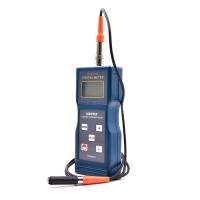
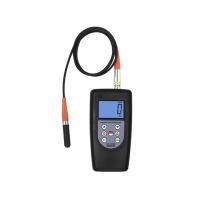
The purpose of measuring the thickness of the aluminum plate coating is to ensure the quality and performance of the aluminum plate. Aluminum plate coating is usually used to improve the corrosion resistance, wear resistance and appearance quality of aluminum plate. If the coating thickness is too thin, the aluminum sheet may not provide adequate protection, leaving the aluminum sheet vulnerable to corrosion, abrasion, and other damage. On the contrary, if the coating is too thick, not only will the material be wasted, but it may also cause uneven coating, cracking and other defects. Therefore, measuring the coating thickness of the aluminum plate can ensure that the protective performance and appearance quality of the aluminum plate meet the requirements, so as to ensure its reliability and durability in various applications.

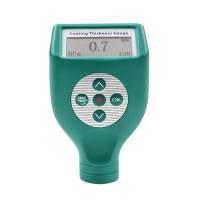
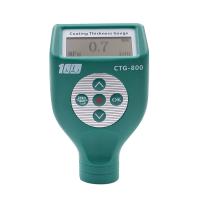
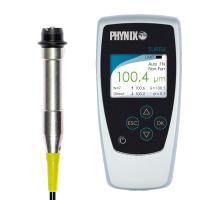
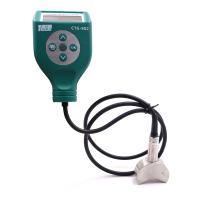
Coating Thickness Gauges are widely used in the measurement of aluminum plate coating thickness, and can be used to measure the thickness of various metal plating, alloy plating, organic coatings, etc., including nickel, chromium, zinc, silver, copper, etc.
Steps:
Turn on the coating Thickness Gauge, and place the measuring probe on the standard plate for calibration to ensure the accuracy of the instrument.
Prepare the aluminum plate that needs to measure the coating thickness to ensure that the surface is clean, smooth and free of impurities.
Place the measuring probe on the surface of the aluminum plate to be tested, make sure it is in close contact with the surface, and select a suitable measurement position.
Turn on the coating Thickness Gauge and start measuring, place the probe on the surface of the aluminum plate to be tested and wait for the instrument to read. The readings are usually in millimeters or microns.
Record the coating thickness of the tested aluminum plate according to the measurement results, and save the results in a suitable record form or data system for subsequent use.
After finishing the measurement, turn off the coating Thickness Gauge and clean the measuring probe for the next use.
Precautions:
Ensure the accuracy of the instrument and calibrate the probe to the standard plate before measurement.
When measuring, make sure that the probe is in close contact with the surface of the measured object to avoid measurement errors.
For different types of coatings, appropriate measurement modes should be selected to ensure accuracy.
During the measurement process, the hand should be kept stable to avoid vibration from interfering with the measurement results.
The probe should be cleaned in time after the measurement to avoid contamination and damage.