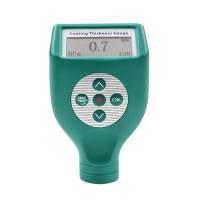
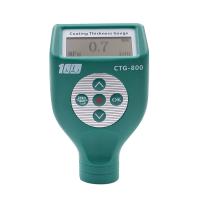
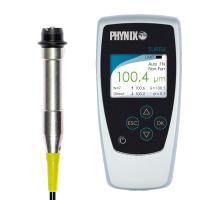
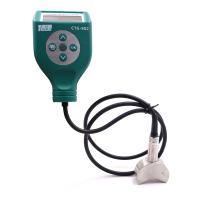
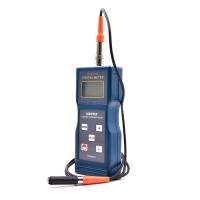
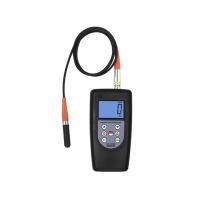
Marine paint film is a coating widely used to protect the surface of ships to prevent damage from factors such as corrosion, sea water and ultraviolet rays. Measuring marine paint film thickness ensures coating quality and protection, and helps manufacturers and maintenance personnel confirm that coating thicknesses are within specification. Coatings that are too thin may not provide adequate protection, while coatings that are too thick increase material costs and may affect coating performance. In addition, measuring marine paint film thickness can also help to monitor the wear and tear of the coating, so that repairs and recoating can be carried out in time. Measuring marine paint film thickness can also help ensure that a vessel complies with relevant standards and regulations to ensure vessel safety and reliability. Therefore, for ship manufacturers, maintenance personnel and quality control personnel, measuring the thickness of the ship's paint film is a necessary step to ensure the effectiveness and quality of the ship's surface protection.

application:
Detect whether the coating thickness of the ship paint surface meets the requirements;
Monitor the changes in the coating thickness of marine paint during use;
For different batches of marine paint, monitor whether the coating thickness is consistent for quality control;
Check whether there are problems such as uneven thickness or paint film defects on the surface of the ship paint.
Steps:
Choose the correct coating Thickness Gauge and probe, and ensure that it is in full contact with the ship's paint surface;
Before measuring, the surface needs to be cleaned and ensure that the surface is free of impurities and grease;
Place the coating Thickness Gauge at the position to be measured, and place the probe on the paint surface of the ship according to the instructions of the coating Thickness Gauge. Usually, the selected substrate type will be displayed on the coating Thickness Gauge, so it is necessary to ensure that the correct substrate type is selected before proceeding. After waiting for the coating Thickness Gauge reading to stabilize, record each measurement;
Multiple measurement points are selected on the marine paint surface to ensure uniform thickness across the entire coating surface. The measurement points selected at different positions should be at least 10 mm away from the edge to avoid the thickness variation at the edge from affecting the measurement results;
Calculate the average value of all the measurement data, and compare the result with the thickness requirements of the marine paint to judge whether the coating meets the requirements;
After use, the coating Thickness Gauge should be cleaned in time to maintain its long-term use.
Please note that the operating steps may vary depending on the model and manufacturer of the coating Thickness Gauge, please consult Beichao for details. Therefore, before use, be sure to read the instruction manual of the coating Thickness Gauge carefully to ensure correct operation.