Solvent is a volatile liquid, and different types of coatings (or film-forming substances) have different solvents.
The role of solvents
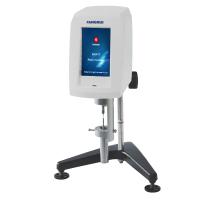
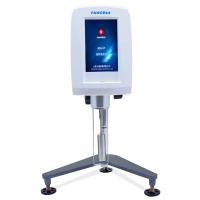
During the film-forming process of the paint, the solvent gradually volatilizes and does not exist in the paint film. The main function of the solvent is to keep the paint in a dissolved state to adjust the viscosity of the paint (related instruments: viscometer), which is convenient for construction and makes the paint film properly volatilize. Speed to achieve smooth, glossy, defect-free. The volatilization speed of the solvent needs to be moderate, suitable for the formation of the film, neither too fast nor too slow. If the volatilization is too fast , it will affect the leveling and brush back time, and cause defects such as brush lines, pinholes and pitting in the paint film. And because the solvent volatilizes too fast, the air around the film cools down rapidly, causing condensed water to form on the paint film and the film turns white. If the volatilization is too slow, it will also cause defects such as pinholes , sagging, and foaming.
Solvent Requirements
The general requirements for solvents are: strong dissolving ability, moderate volatilization speed, non-toxic or very little toxicity, and low price. Since general solvents are flammable, explosive, and their vapors are toxic, care must be taken during use and transportation.
Examples of common solvents
(1) No. 200 solvent gasoline (pine perfume) has low toxicity and medium solvency. It is mainly suitable for grease paint and natural resin paint.
(2) Toluene and xylene are both coking solvents. Toluene has a fast volatilization speed and strong dissolving power, and is a strong solvent for natural drying oils and resins (rosin derivatives, modified phenolic, alkyd, urea-formaldehyde, asphalt, ethyl fiber, etc.). The volatilization speed of xylene is moderate, and its solvency is inferior to that of toluene. It can be used for both normal temperature drying paint and drying paint, such as amino alkyd baking varnish, phenolic varnish, etc.
(3) Alcohol solvents such as acetic acid and butanol cannot dissolve in general resins, but can dissolve shellac and polyvinyl butyral
Alcohol-soluble resins such as resins. Butanol has a lower dissolving power than ethanol and slower volatilization, so it can be used as a solvent for amino resins.
(4) Methyl ethyl ketone and methyl ethyl butyl ketone are solvents for epoxy resin and vinyl resin.