In order to improve the construction performance of the coating, various additives are added. They are used in small amounts, often only a few percent to a few thousandths, or even a few ten thousandths, but they have significant effects. General additives include: drier, plasticizer, curing agent, anti-skinning agent, anti-sedimentation agent, ultraviolet absorber, slip agent, defoamer, etc. Among them, driers and plasticizers are commonly used.
1. Drier
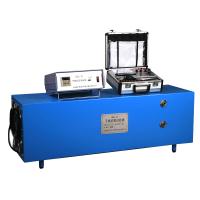
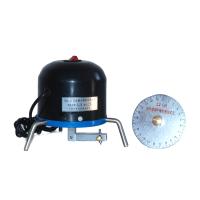
The role of drier (also known as dry material, desiccant) is to shorten the drying time of paint film (recommended instrument: drying time Tester). That is to accelerate the oxidation and polymerization of oil and resin in the film. For example, taking linseed oil as an example, it takes 3-5 days to form a film without adding a drier (it will dry and form a film in one day, and it will dry and form a film in 12 hours after adding a desiccant.
The drier can be used alone, or several kinds of drier can be used in combination. Many metal oxides and metal salts can be used as drier. At present, naphthenic acid (naphthalene acid) soaps are mainly used as driers in coatings, and driers are generally made into liquids for application.
2. Toughening agent
Tougheners are also called plasticizers and softeners. It is mainly used in oil-free coatings to increase the toughness of the paint film, improve the adhesion and eliminate the brittleness of the paint film.
1) The requirements for the toughening agent are colorless, odorless, non-toxic, non-flammable, good chemical stability and low volatility.
2) The types of toughening agents are divided into two categories. One is solvent-based, which is a solvent for polymers with low volatility, which can increase the elasticity of polymers and can be dissolved in any proportion; the other is non-solvent-based, which is a non-volatile mechanical solvent for polymers. The mixed diluent can increase the elasticity, but there are certain restrictions on mutual solubility.
3) Commonly used toughening agents
Non-drying oils (such as castor oil), phthalates (such as dibutyl phthalate, dioctyl ), phosphate esters (such as tricarboxyphosphate), chlorine compounds (such as benzene, chlorinated paraffin, etc.).
4) Toughening mechanism
There are two versions. One is the gelation theory. It is believed that the rigidity of polar polymers is due to the cross-linking of polymer molecules at certain intervals to form a network and honeycomb structure. The entry of polar toughening agents destroys the crosslinking points formed by polar groups or hydrogen bonds in the polymer. The deformation of the structure is not easy to break, thereby reducing the rigidity. The other is the theory of lubrication, which believes that the toughening agent enters the non-polar polymer to increase the molecular distance and form a lubricant between the molecules. When the polymer is deformed, the movement resistance of the polymer molecules is small and easy to deform, thus toughening.
In short, the toughening agent increases the elasticity of the polymer with its large molecule, low mobility and low volatility, but its cold resistance is poor. When the amount of solvent-based toughening agent increases, the film tension decreases, while non-solvent-based toughening has little .