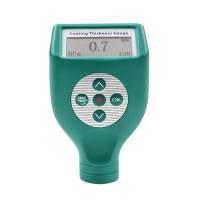
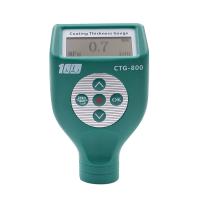
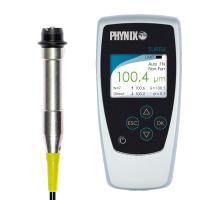
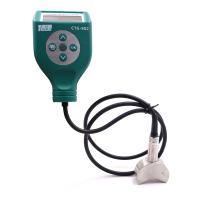
It is very important to measure the resin PCB coating thickness, because the thickness of the coating directly affects the quality and reliability of the PCB. If the coating is too thin, the PCB may be corroded and damaged due to the harsh conditions of the environment; if the coating is too thick, the components on the PCB may not be connected to the surface of the circuit board, affecting the working performance of the circuit. In addition, accurate measurement of coating thickness can also ensure the consistency and quality control of the production process, and improve the production efficiency and stability of PCB. Therefore, measuring resin PCB coating thickness is a necessary step for any PCB manufacturer or user to ensure the quality and performance of the final product.
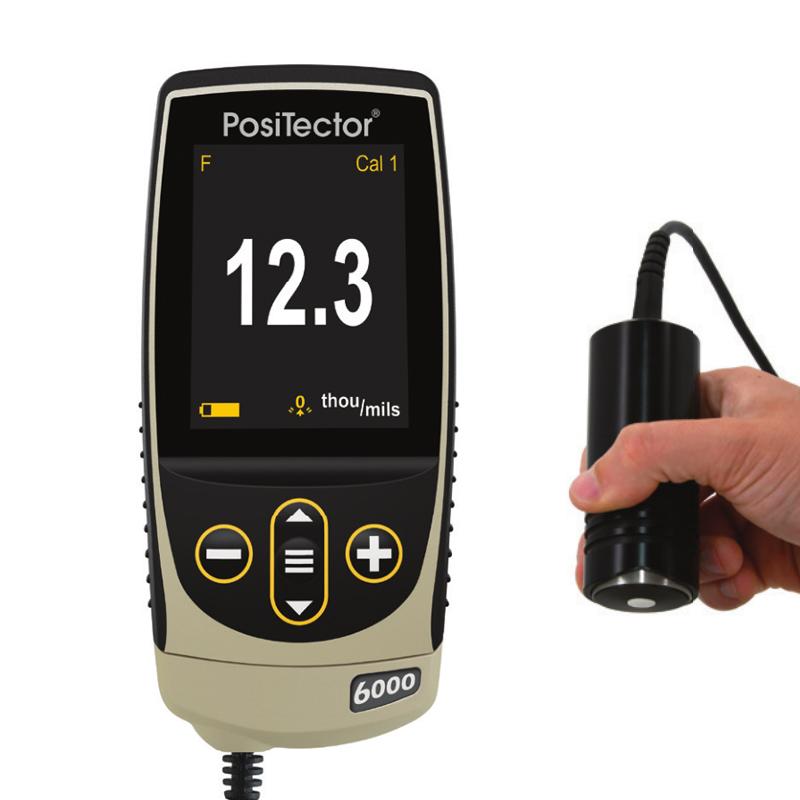
In the thickness measurement of resin PCB coating, the application of coating Thickness Gauge can help to determine the thickness of resin coating and ensure that the quality of the circuit board meets the design requirements. The following are the operation steps of the coating Thickness Gauge in the resin PCB coating thickness measurement:
1. Preparation: Make sure the coating Thickness Gauge is calibrated and in working order. Place the test board on a level surface and prepare for testing.
2. Select the probe: select the appropriate probe to suit the thickness and shape of the resin coating. In general, better measurement results can be obtained with planar probes.
3. Calibration: According to the operation manual of the coating Thickness Gauge, calibrate it to the correct mode and unit. Usually, accuracy can be ensured by performing a calibration on a standard sample of known thickness.
4. Measurement: Put the probe on the resin coating of the test board, make sure it is close to the surface. Press the measure button on the coating Thickness Gauge and wait for a while until the measurement stabilizes. Record the test results.
5. Repeated measurement: In order to improve the measurement accuracy, multiple measurements can be made at the same position and the average value can be calculated. In addition, when testing different positions, you should also pay attention to the difference in thickness at different positions and take it into account when calculating the results.
6. Data analysis: According to the obtained data, analyze whether the thickness of the coating meets the design requirements, and make necessary adjustments.
7. Cleaning: After the measurement, clean the surface of the probe and test plate to ensure the maintenance and service life of the coating Thickness Gauge.