concept
Nano-coating coating thickness measurement refers to the measurement of the thickness of a film coated on the surface of an object at the nanometer scale. Nano-coatings are commonly used in various fields such as medicine, electronics, construction, energy, etc., to provide certain protection and improve the performance of objects. Due to the special properties of nanocoatings, the measurement of their coating thickness becomes more important and challenging. The thickness of nano-coatings is usually very thin, generally between a few nanometers and tens of nanometers, so it is necessary to use high-resolution and high-precision testing methods and tools to measure its thickness.
Measurement significance of coating thickness
Accurate measurement of nano-coating coating thickness can help manufacturers ensure the performance and quality of coatings, and can improve product reliability and stability. In addition, measuring the coating thickness of nano-coatings is also an important step to ensure production efficiency and reduce costs. For industries and manufacturers using nano-coatings, such as medical devices, electronic devices, solar cells, fuel cells, etc., measuring the coating thickness of nano-coatings is also a necessary step to ensure product quality and performance while reducing costs and Increase competitiveness.

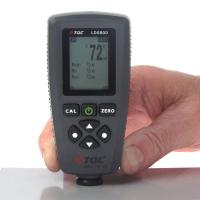
Measuring method of coating Thickness Gauge
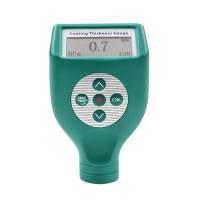
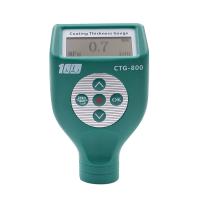
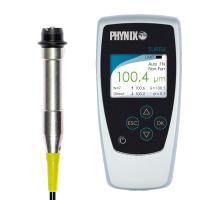
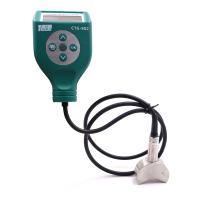
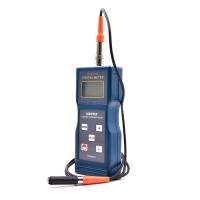
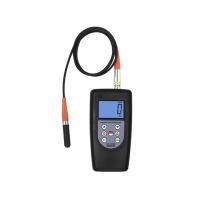
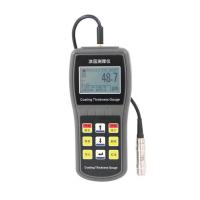
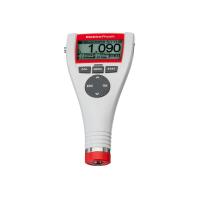
The coating Thickness Gauge can also be used in the thickness measurement of nano-coating coatings, but some special operating details and skills need to be paid attention to.
The extremely thin thickness and high degree of uniformity of nanocoatings make the measurement results have a significant impact on the properties of the coating. Therefore, when using a coating Thickness Gauge for nano-coating thickness measurement, the following points need to be paid attention to:
Calibration: For the measurement of nano coatings, the importance of calibration is self-evident. Before use, the coating Thickness Gauge needs to be calibrated accurately to ensure the accuracy of the measurement.
Measurement position: When measuring nano coatings, the measurement position should be as close to the coating surface as possible to avoid measurement interference. Some coating Thickness Gauges may require the use of special probes and techniques to ensure accurate measurement placement.
Measurement angle: When measuring nanocoatings, the measurement angle is very important. Typically, coating Thickness Gauges need to measure perpendicular to the paint surface. In addition, for reflective nano-coatings, it is necessary to choose the correct angle to avoid the interference of reflection.
Repeatability: Repeatability is an important issue when measuring nanocoatings. Due to the extremely thin thickness and high uniformity of the coating, the measurement results may be affected by many factors, such as temperature, humidity, measurement time, etc. Therefore, multiple measurements need to be taken and averaged to ensure the accuracy and repeatability of the measurement results.
In conclusion, the coating Thickness Gauge is still a very useful tool in the measurement of nano-coating thickness, but some special operating details and skills need to be paid attention to to ensure the accuracy and repeatability of the measurement results.