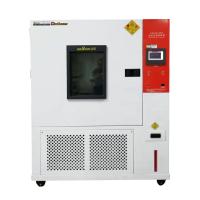
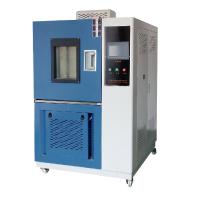
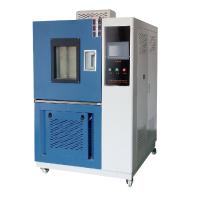
High-low Temperature Test Chambers are widely used in electronics, electrical appliances, electric power, communications, aerospace, automobiles, plastics, metals, chemicals, building materials and other industries. The test of physical, chemical, electrical and other performance changes.

application background
Chips may encounter changes in various environmental conditions during use, such as high temperature, low temperature, humidity, dryness, etc. Changes in these environmental conditions may adversely affect the chip's performance and reliability, or even cause the chip to fail. Therefore, in order to ensure that the chip can work normally and ensure its reliability in various extreme environments, it is necessary to conduct high-low temperature resistance tests on the chip.
Specifically, the high temperature test is to verify the performance and reliability of the chip in a high temperature environment. At high temperatures, the electronic components inside the chip may suffer from current leakage, loose structures, and slower transistors. The low temperature test is to verify the performance and reliability of the chip in a low temperature environment. At low temperatures, the transistors inside the chip can become unstable, causing problems such as signal distortion and power consumption variation. Through the high-low temperature resistance test, these problems can be detected and solved, thereby improving the quality and reliability of the chip.

experiment method
In the chip high-low temperature resistance test, the high-low Temperature Test Chamber can be used to test the reliability and stability of the chip at extreme temperatures. Common test steps include:
1. Preparation: Load the chip to be tested onto the test carrier, and ensure that there are no air bubbles between the chip and the test carrier, and then put the test carrier into the high-low Temperature Test Chamber.
2. High temperature test: Set the temperature of the high-low Temperature Test Chamber to the specified high temperature value, and keep it for a period of time, usually ranging from several hours to several days. During this period, observe whether there are changes in the electrical parameters of the chip, such as leakage current, leakage resistance, capacitance, resistance, etc., and also observe whether the appearance is deformed or damaged.
3. Recovery test: Return the temperature of the high-low Temperature Test Chamber to room temperature, let the chip recover naturally for a period of time at room temperature, and observe the changes in the electrical parameters and appearance of the chip.
4. Low temperature test: Set the temperature of the high-low Temperature Test Chamber to the specified low temperature value, keep it for a period of time, and observe the changes in the electrical parameters and appearance of the chip.
5. Repeat the high-low temperature test: If more rigorous testing is required, the high-low temperature test can be repeated to verify the reliability and stability of the chip in extreme temperature environments.
6. Data processing: According to the test results, evaluate the performance of the chip, including electrical parameters, appearance changes, etc., and generate a test report for product improvement and quality control.