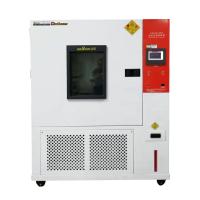
The reason why nylon needs to be tested for high-low temperature resistance is because nylon will be affected by different temperatures during use. If nylon cannot withstand high-low temperature environments, it will lead to problems such as performance degradation, changes in mechanical properties, dimensional changes, and even deterioration. Through the high-low temperature resistance test, the thermal stability and cold resistance of nylon can be evaluated, its performance at different temperatures can be understood, and a scientific basis can be provided for the application of nylon.
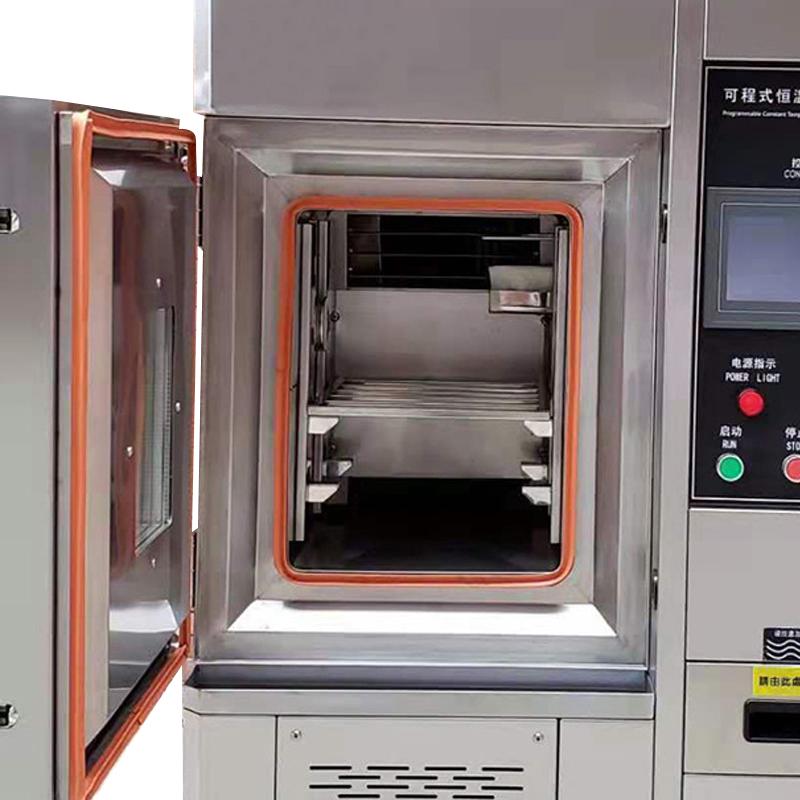
The high-low Temperature Test Chamber is widely used in the high-low temperature resistance test of nylon materials. The following are the test steps:
Select a certain number of samples from the nylon material, cut and prepare them as required.
Place the sample in the sample compartment of the high-low Temperature Test Chamber. Note that the sample should be placed in the center of the sample chamber to ensure that the sample is subjected to a uniform temperature throughout the test.
According to the test requirements, set the high temperature and low temperature parameters of the Test Chamber. Usually, the high temperature parameter is 50°C to 200°C, and the low temperature parameter is -70°C to -20°C, but the specific parameters need to be set according to actual needs.
After setting the test parameters, start the high-low Temperature Test Chamber to start the test. During the test, the Test Chamber will cycle the temperature of the sample according to the set high-low temperature parameters to simulate the use environment of the sample at different temperatures.
During the test, the state changes of the sample, such as discoloration and deformation, can be observed through the observation window in the Test Chamber.
After the test is complete, remove the sample and observe its state change. Depending on the experimental requirements, further analysis and evaluation can be performed.
*Before the high-low temperature test, the appropriate test parameters should be selected according to the characteristics of the sample, and the safety and accuracy during the test should be ensured.