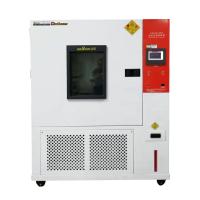
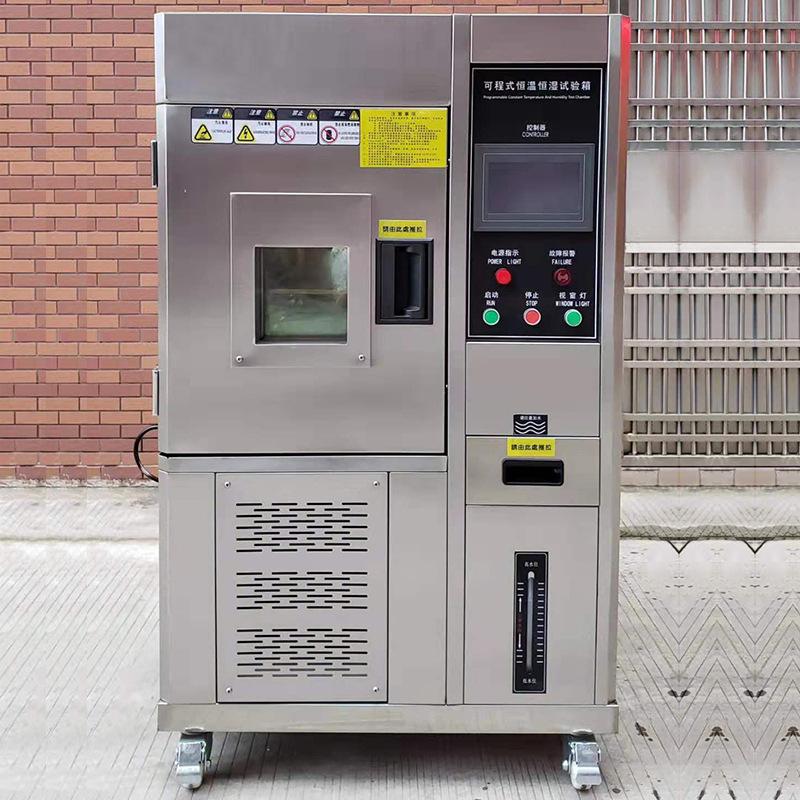
In the high-low temperature resistance test of waterproof materials, the high-low Temperature Test Chamber is an indispensable equipment. The purpose of this test is to test the physical and chemical properties of waterproof materials under high-low temperature conditions, including deformation, fracture, weather resistance, etc. The following is the application and test steps of the high-low Temperature Test Chamber in the high-low temperature resistance test of waterproof materials:
application
The reason why waterproof materials need to be tested for high-low temperature resistance is because waterproof materials will be affected by different temperatures during use. If waterproof materials cannot withstand high-low temperature environments, they will lose their waterproof performance, resulting in leakage, corrosion and other problems. At the same time, waterproof materials are also prone to problems such as cracking and breaking in low temperature environments. The high-low Temperature Test Chamber can simulate various high-low temperature environments for stable and accurate temperature control and testing. In the high-low temperature resistance test of waterproof materials, different temperature and humidity conditions can be simulated through the high-low Temperature Test Chamber to evaluate the performance of waterproof materials.
experiment procedure
Prepare samples: Cut the waterproof material to be tested into an appropriate size according to the requirements, and record the sample number and test conditions.
Drying: put the sample into a high-low Temperature Test Chamber, and dry it under atmospheric pressure to make it reach a constant quality. The usual drying condition is 60°C for 6 hours.
Low temperature test: put the sample into the high-low Temperature Test Chamber, and conduct the test at a specified low temperature, for example: -20°C, for 2 hours. During this time, the appearance and physical properties of the samples were recorded.
Recovery temperature: Take the sample out of the high-low Temperature Test Chamber, return to normal temperature, and wait for 2 hours.
High temperature test: put the sample into a high-low Temperature Test Chamber, and test it at a specified high temperature, for example: 80°C, for 2 hours. During this time, the appearance and physical properties of the samples were recorded.
Evaluation results: draw conclusions by evaluating the performance of samples in high-low temperature tests. If the sample performs well in the high-low temperature test, it means that it has excellent high-low temperature resistance.
NBCHAO reminds you: the above test steps are only a general reference, and the specific test steps need to be formulated according to the test standards. At the same time, it is necessary to ensure the accuracy and stability of the high-low Temperature Test Chamber during the test, so as to ensure the accuracy and reliability of the test results.