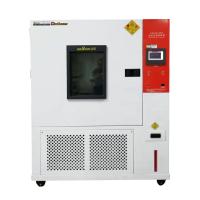
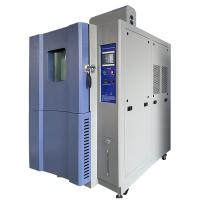
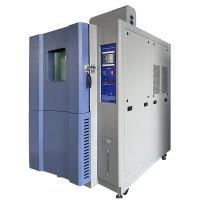
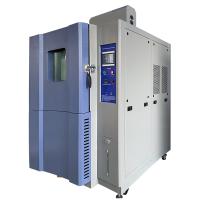
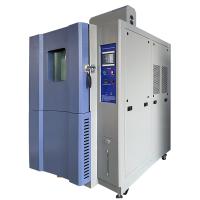
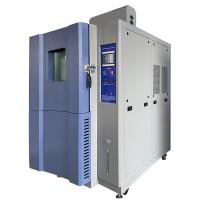
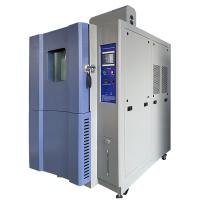
The high-low Temperature Test Chamber plays an important role in the high-low temperature resistance test of electronic products. It can simulate the working conditions of electronic products in different environments, so as to test their performance under extreme conditions. The following introduces the application and test procedures of the high-low Temperature Test Chamber in the high-low temperature resistance test of electronic products.
application
Electronic products may experience problems such as circuit aging, mechanical performance changes, component failure, expansion and contraction of electronic components under different temperature environments, which will affect the service life and stability of electronic products. Therefore, in order to ensure the quality and reliability of electronic products in different temperature environments, high-low temperature resistance tests are required to determine whether their performance under extreme temperatures meets the requirements. This can further ensure the normal operation of the electronic product under various temperature environments, reduce the failure rate, and improve the reliability and safety of the electronic product.
The high-low Temperature Test Chamber can conduct high-low temperature cycle tests, high temperature aging tests, low temperature aging tests, constant temperature and humidity tests, temperature shock tests, etc. on electronic products to test the high-low temperature resistance, stability and reliability of electronic products.
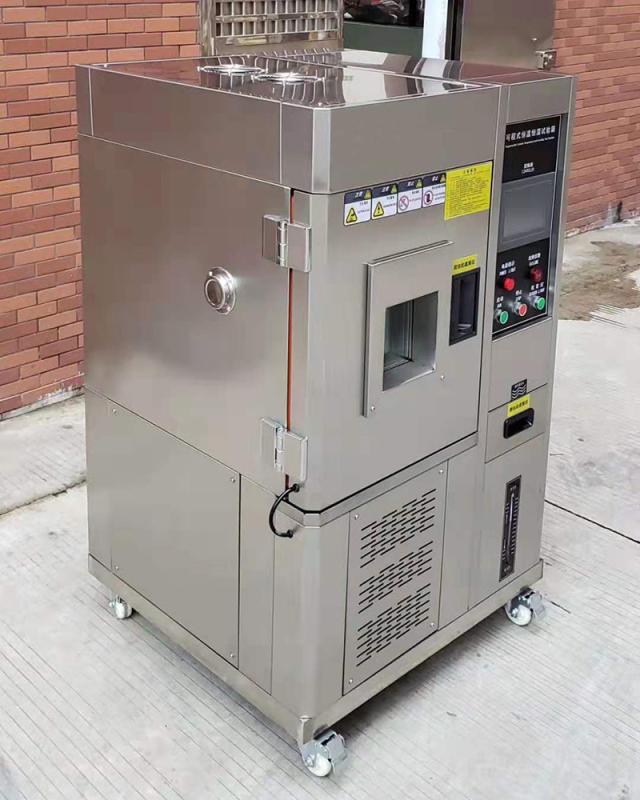
experiment procedure
1. Prepare the test samples, place the electronic products to be tested in the high-low Temperature Test Chamber, pay attention to the density of the sample arrangement should be moderate, so as not to affect the test effect.
2. Set test parameters, including test temperature, humidity, time, etc., according to the use environment and technical requirements of electronic products.
3. Carry out high-low temperature cycle tests, raise the temperature of the Test Chamber from low temperature to high temperature, and then cool down to low temperature, repeat the cycle, and record the performance of electronic products in each temperature range.
4. Carry out high-temperature aging test, set the temperature of the Test Chamber at high temperature, last for a certain period of time, and record the performance changes of electronic products.
5. Carry out the low-temperature aging test, set the temperature of the Test Chamber at low temperature, last for a certain period of time, and record the performance changes of electronic products.
6. Carry out constant temperature and humidity test, set the temperature and humidity of the test box in a constant state, last for a certain period of time, and record the performance of electronic products.
7. Carry out the temperature shock test, quickly heat up or cool down the temperature of the Test Chamber to the set temperature, keep it for a period of time, then return the temperature to the initial state, repeat it many times, and record the performance of the electronic product.
8. Analyze the test results, evaluate the high-low temperature resistance performance of electronic products based on the test data, and provide reference for subsequent product improvement and design.