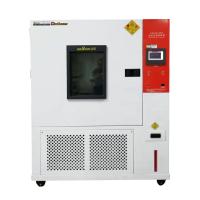
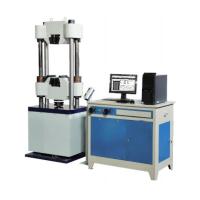
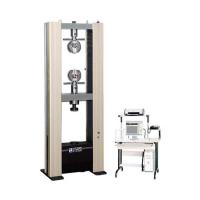
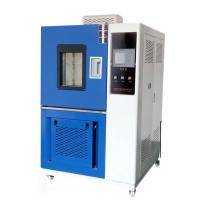
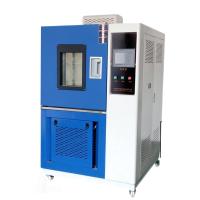
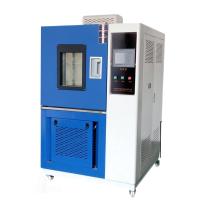
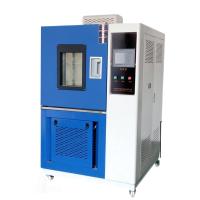
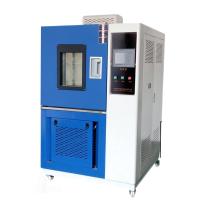
The high-low Temperature Test Chamber can be used to test the high-low temperature resistance of plastic rods. Commonly used test methods include heat distortion temperature test and cold bending test.
The reason why plastic rods need to be tested for high-low temperature resistance is because plastic rods may be affected by different temperatures during use and storage. If plastic rods cannot withstand high-low temperature environments, their physical properties will decline, such as strength, hardness, Poor toughness, etc., may also lead to problems such as deformation, aging, cracking, and fracture. Especially in a high temperature environment, the plastic rod is easy to become soft and deformed, while in a low temperature environment, the plastic rod is easy to become brittle and brittle. Through the high-low temperature resistance test, the thermal stability and cold resistance of plastic rods can be evaluated, and its performance at different temperatures can be understood to provide a scientific basis for the selection and use of plastic rods.
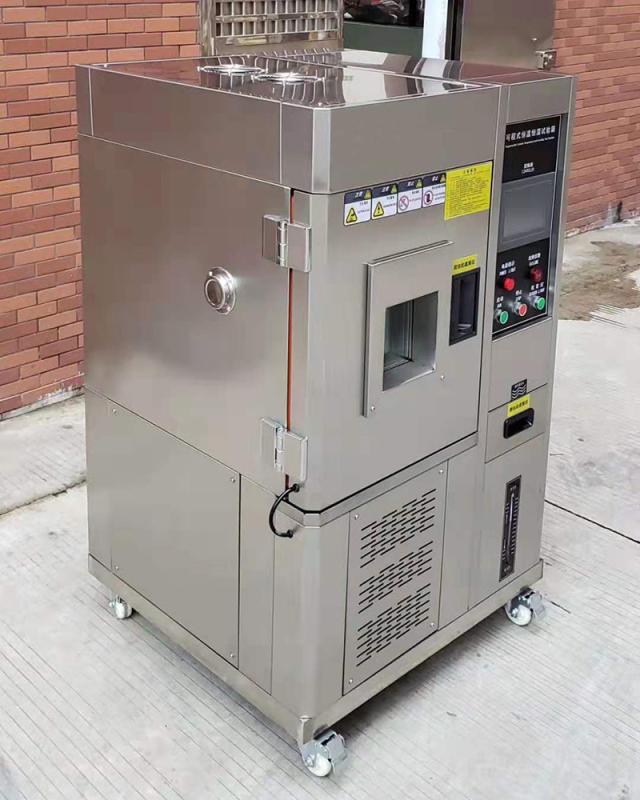
experiment method
Here are some basic test steps:
Prepare the sample: Cut the plastic rod to be tested into a sample of a certain length, usually about 100mm in length and about 10mm in diameter.
Heat distortion temperature test: Place the sample in a high-low temperature test box, set the temperature and time according to relevant standards, generally 120°C for 2 hours. Immediately after removing the specimen, place it on a support frame to avoid deformation during cooling. After the sample is cooled to room temperature, measure the heat distortion temperature of the sample.
Cold bending test: Place the sample in a high-low temperature test box, set the temperature and time according to relevant standards, generally -40°C, 2 hours. After taking out the sample, bend it to a certain angle (usually 180 degrees), then restore the sample to its original shape and observe whether there are cracks, breaks, etc. on the surface of the sample.
Analysis results: Evaluate the high-low temperature resistance performance of the samples according to the test results. If the heat distortion temperature is high and the cold bending performance is good, it means that the high-low temperature resistance of the sample is better, and vice versa.