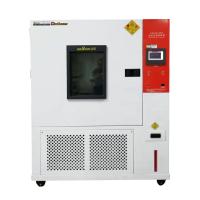
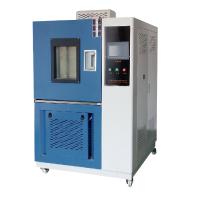
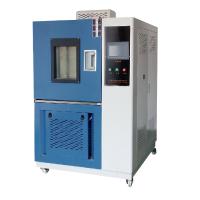
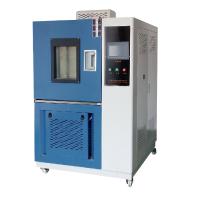
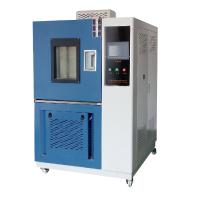
Car accessories need to undergo high-low temperature resistance tests, mainly to evaluate the changes in their physical and chemical properties under different temperature conditions to ensure that they can withstand various environmental conditions while maintaining the stability and reliability of their quality and performance .

Car accessories are usually used for interior or exterior decoration of vehicles, such as car floor mats, car seat covers, steering wheel covers, car exterior trim strips and so on. Through the high-low temperature resistance test, important indicators such as wear resistance, oxidation resistance, and UV resistance of car accessories can be evaluated at different temperatures, so as to ensure that they can be used normally in various environments and have high durability. In addition, automotive accessories may be deformed, softened, and cracked at high temperatures, while at low temperatures they may become hard, brittle, or lose their softness. Therefore, the high-low temperature resistance test can also evaluate the performance of automotive accessories under different temperature conditions. Under the reliability and security. The high-low temperature resistance test can ensure that automotive accessories have stable performance and quality in various environments, meet the requirements of vehicle interior and exterior decoration, and improve the safety and comfort of passengers and drivers.

experiment procedure
The following are possible test steps:
Prepare test samples: Prepare the car accessories to be tested, including information such as its material, size, and color. Make sure that the surface of the sample has no visible damage or defects.
Place the sample: Place the test sample in the high-low Temperature Test Chamber to ensure that the surface of the sample is not subject to pressure or damage.
Set up test conditions: According to test standards or product specifications, set up test conditions for high-low Temperature Test Chambers, including temperature range, heating/cooling rate, holding time, etc.
Start the test: start the high-low Temperature Test Chamber, let it heat up or cool down to the set temperature, keep it for a period of time, then gradually adjust to another temperature, and keep it for a period of time. This cycle is repeated many times to simulate the use of the vehicle in different environments.
Observe the sample: During the test, you can take out the sample regularly to observe whether there are cracks, deformation, fading, etc. on the surface, and record it. If more detailed analysis is required, equipment such as a microscope can be used for observation.
Completion of the test: When the test is completed, take out the sample, observe and record its appearance and performance, and evaluate and analyze according to the test standard or product specification.
Beichao reminds you: Different car accessories may require different test conditions and methods, so before testing, you need to understand the relevant test standards or product specifications, and conduct tests according to the standard requirements.