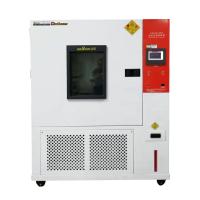
Self-adhesives are tested for high-low temperature resistance in order to evaluate their adhesion and reliability in different temperature environments. Self-adhesive is usually used in labels, stickers, tapes and other products. It has cohesive force and adhesiveness, and can fix and fit the surface of objects. In actual use, these products may be affected by different temperature environments, including high temperature, low temperature and temperature changes. If the self-adhesive cannot maintain its cohesive force under these conditions, it may cause problems such as label peeling and tape failure, affecting its use effect and reliability. Through the high-low temperature resistance test, the performance and reliability of the self-adhesive under different temperature environments can be evaluated, so as to select the suitable self-adhesive type and usage scenario, while ensuring its quality and reliability.
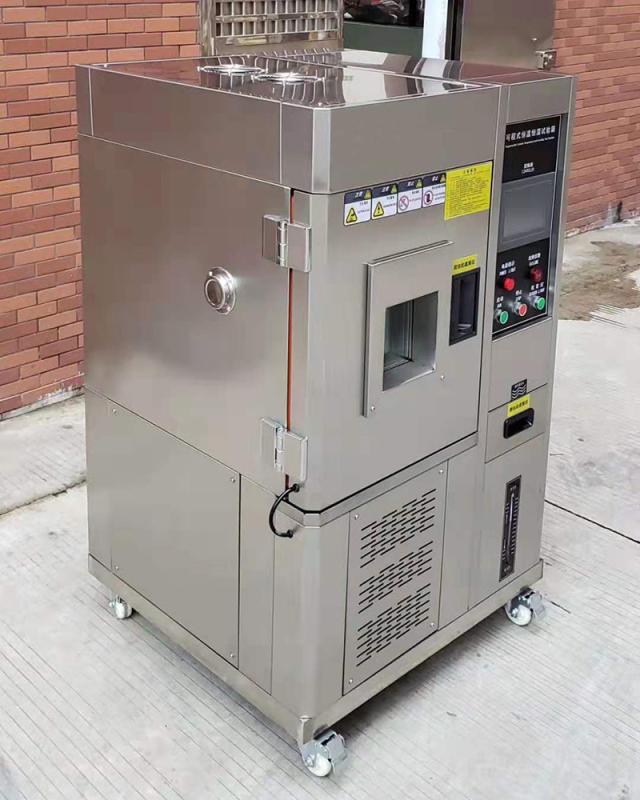
The application of high-low Temperature Test Chamber in the high-low temperature resistance test of self-adhesive and its test steps are as follows:
1. Purpose of the test: To evaluate the stability of self-adhesive materials in high-low temperature environments, and to determine their scope of application.
2. Test method:
(1) Cut the self-adhesive sample to a suitable size and paste it on a glass or metal plate;
(2) Place the sample in the high-low Temperature Test Chamber, and set the corresponding temperature and time parameters;
(3) After taking out the sample, conduct appearance and performance testing, such as adhesion, tensile strength, etc.
3. Test steps:
(1) Place the high-low Temperature Test Chamber in the test room, and connect the power supply and air source;
(2) Select appropriate temperature and time parameters according to the properties and specifications of the self-adhesive sample;
(3) Paste the self-adhesive sample on the glass or metal plate and place it in the test box;
(4) Set the temperature and time parameters and start the test;
(5) After the test is over, take out the sample and conduct appearance and performance inspection;
(6) Record test data and analyze test results.
It is worth noting that the sample should be prevented from being polluted or affected by other substances during the test to ensure the accuracy of the test results. At the same time, according to specific application scenarios and requirements, appropriate adjustments and modifications can be made to the test methods and parameters.