Architectural coatings are subjected to high-low temperature resistance tests to evaluate their performance and reliability in different temperature environments. Architectural coatings are usually used for decoration and protection of indoor and outdoor walls, roofs and other building structures, and have the functions of waterproof, anti-corrosion, heat preservation and aesthetics. In actual use, these products may be affected by different temperature environments, including high temperature, low temperature and temperature changes. If the paint cannot maintain its color, gloss and durability under these conditions, it may cause problems such as color fading and paint peeling on the building surface, affecting its aesthetics and service life. By conducting high-low temperature resistance tests, the performance and reliability of architectural coatings under different temperature environments can be evaluated, so that suitable coating types and usage scenarios can be selected while ensuring their quality and reliability.
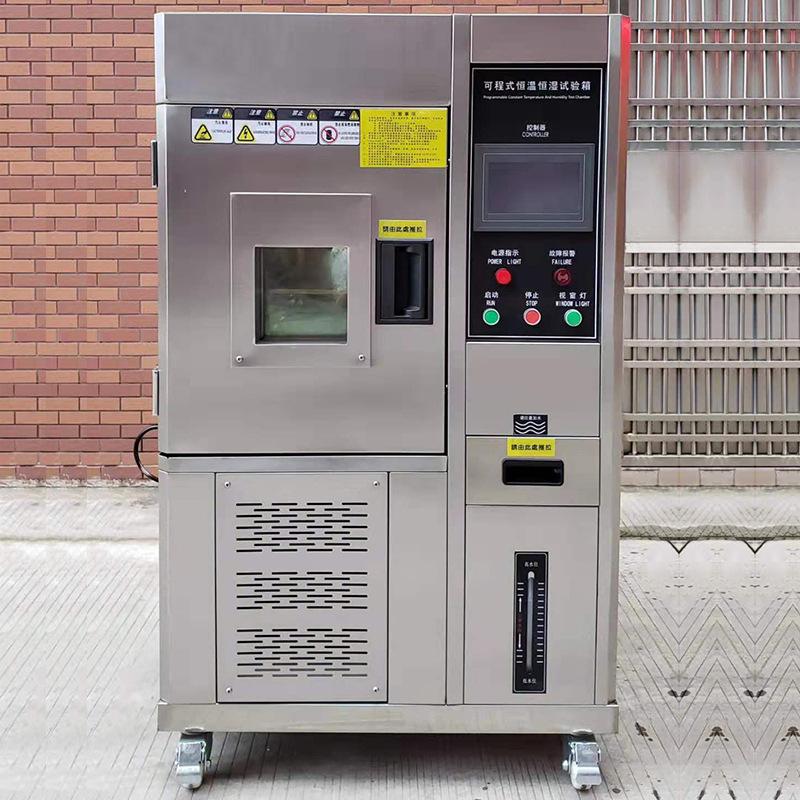
experiment procedure
The high-low Temperature Test Chamber can be used to evaluate the high-low temperature resistance of architectural coatings. The following are the general test steps:
Sample Preparation: Paint samples were prepared according to standard methods and applied to test panels. Substrate materials representative of actual service conditions, such as metal or concrete slabs, are recommended.
Sample Curing: Samples were cured at ambient temperature according to the paint manufacturer's instructions.
Preheating: Put the sample into the high-low Temperature Test Chamber, and set the temperature of the Test Chamber to the predetermined high temperature value. Allow the sample to stabilize at elevated temperature for a period of time.
Cooling: Reduce the temperature of the Test Chamber to a predetermined low temperature value. Allow the sample to stabilize at low temperature for a period of time.
Recovery: Return the temperature of the Test Chamber to normal temperature, and allow the sample to recover at normal temperature for a period of time.
Observation and evaluation: evaluate whether the appearance, color, adhesion, hardness and other properties of the sample have changed.
Depending on the standard and requirements used, the above steps may vary. It is recommended to read and follow the chosen standard and paint manufacturer's instructions carefully before carrying out the test.