Glass materials may be affected by high-low temperatures during use, so high-low temperature tests are required to test their resistance. The high-low temperature resistance test of glass usually includes the following contents:
High temperature test:
Glass samples are exposed to high temperatures, typically 300-500°C, for hours to days. At this time, the glass material will be affected by thermal expansion and thermal stress, etc., and whether it can withstand the influence of high temperature environment is tested to evaluate its service life and reliability.
Low temperature test:
The glass samples are placed in a low temperature environment, typically -40°C to -80°C, for hours to days. At this time, the glass material will be affected by cold expansion and cold stress, etc., and whether it can withstand the influence of low temperature environment is tested to evaluate its service life and reliability.
Temperature cycle test:
The glass samples are alternately placed in high-low temperature environments to test their stability and tolerance under different temperature changes, so as to simulate the temperature changes in the actual use environment.
These tests can help glass manufacturers and users evaluate the performance and reliability of the material, ensuring that it can work stably and for a long time in actual use.
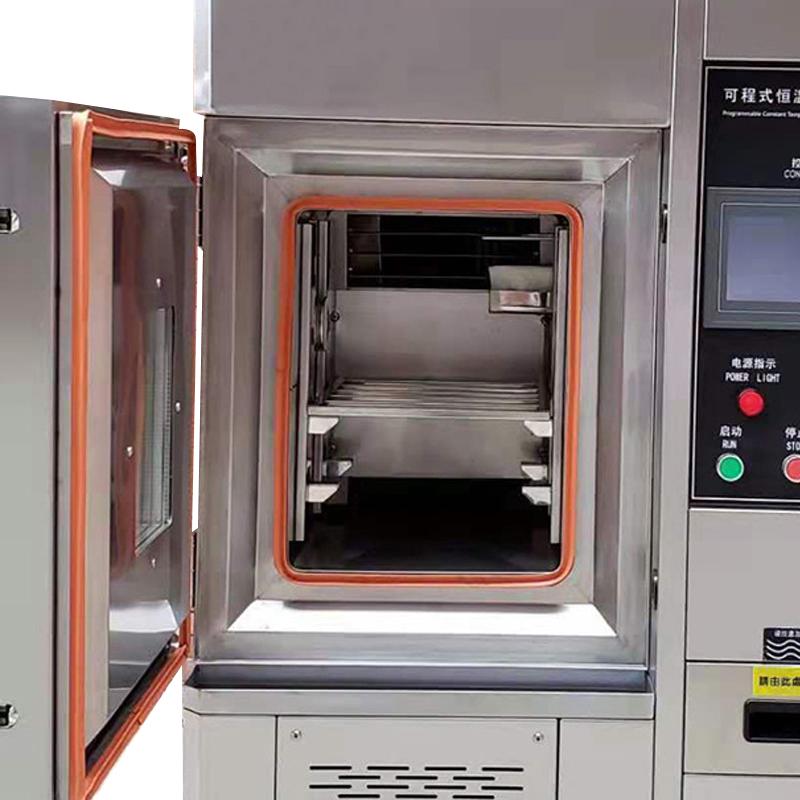
Application of high-low Temperature Test Chamber in glass high-low temperature resistance test and its test steps:
High-low Temperature Test Chambers can be used to test the durability and stability of glass products in high-low temperature environments, as well as evaluate their performance and reliability. The following are the general test steps:
Prepare samples: prepare the glass products to be tested, and perform pretreatment or treatment as required, such as cleaning or coating treatment.
Place the sample in the Test Chamber: put the sample into the Test Chamber of the high-low Temperature Test Chamber, and select the temperature and time as required.
Heating/cooling process: According to the need, adjust the temperature of the Test Chamber to high or low temperature, and then keep it for a period of time to reach a stable state.
Observe the test results: observe whether the surface state and performance of the sample have changed, such as whether the surface has blisters, cracks, deformation, etc.
Record test data: record test time, temperature and other relevant data for subsequent analysis and evaluation.
In addition, different types of glass products may require different test parameters and test steps, so before testing, it is necessary to formulate corresponding test plans and programs according to specific conditions.