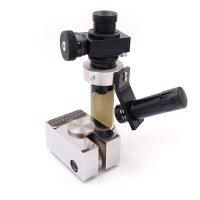
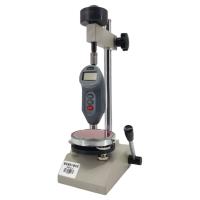
1. Inspection equipment
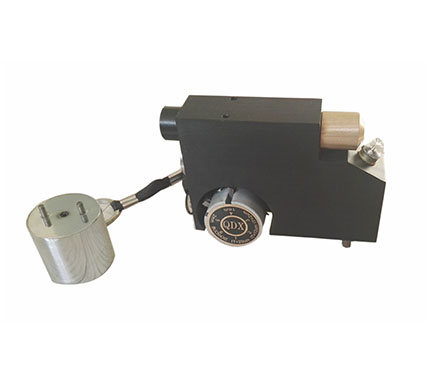
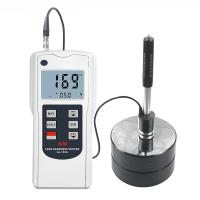
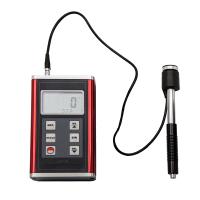
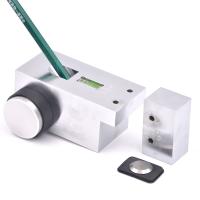
When testing the macroscopic hardness of the coating and selecting the hardness meter used, the softness and hardness of the coating material and the thickness of the coating should be considered to avoid reflecting the hardness of the substrate into the measurement results and causing errors. It is generally recommended to use standard Rockwell hardness testing machines and superficial Rockwell hardness testing machines.
2. Specimen Preparation
The surface and the back of the sample for measuring the hardness of the coating should be flat and the two planes should be parallel to each other. The coating surface should be smooth and clean. At least five pressure points shall be measured for each sample. The distance between two measuring points or the distance between any measuring point and the edge of the sample shall not be less than 3mm. The thickness of the sample should ensure that there is no obvious deformation on the back of the sample after the test. For cylindrical samples, the measuring surface should be ground so that it is parallel to the anvil of the Hardness Tester.
3. Inspection method
Each turn of the dial pointer of the standard Rockwell hardness testing machine means that the indenter has an indentation depth of 0.203. In order to accurately measure the coating thickness, the minimum coating thickness should be more than 10 times the indentation depth. Therefore, when testing the hardness of the coating on each scale of the standard Rockwell Hardness Tester, the thickness of the coating should be greater than 2 mm.
When testing, the hardest wear-resistant coating should use C scale and A scale, and the surface Rockwell hardness should be measured by 15N, 30N, 45N; for slightly soft coatings, B scale or A scale can be used, and the surface Rockwell hardness should be measured by 15T, 30N, and 45N. 30T, 45T scale measurement. The principle of use depends on the thickness of the coating. Thin coatings are measured by superficial Rockwell hardness; for softer coatings, they are measured by a superficial Rockwell hardness machine with a main load of 15kg, respectively using steel balls with a diameter of 1.588mm (1/16") and R15T scale Table; diameter 3.175mm steel (1/8") ball, R15w scale; diameter 12.7001Tlm (1/2") steel ball, R15Y scale.
When the steel ball is installed or replaced, the reading of the hardness for the first time will not be included in order to prevent the reading from being inaccurate due to improper installation of the steel ball. The test points shall be evenly distributed on the centerline of the coating surface and shall avoid defects. The number of measuring points should not be less than ), and finally take the average number as the hardness value of the coating.