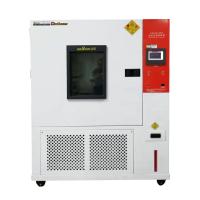
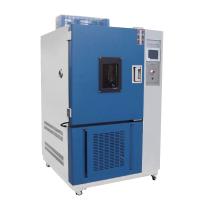
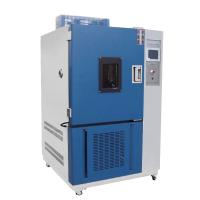
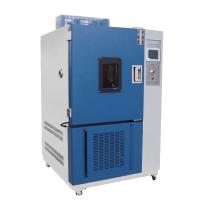
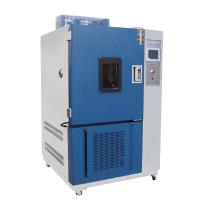
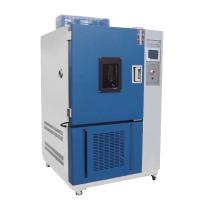
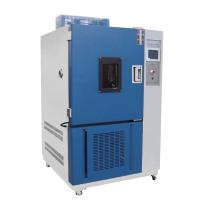
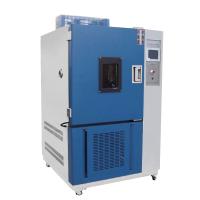
The high-low Temperature Test Chamber can be used for the high-low temperature resistance test of the positive and negative electrode materials of lithium-ion batteries. The main purpose is to simulate the use environment of lithium-ion batteries at different temperatures to evaluate the performance and reliability of materials.

application background
Lithium-ion battery is an important battery widely used in portable electronic devices, electric vehicles and other fields. Among them, the positive and negative electrode materials are the core components of lithium-ion batteries, and their performance stability and safety are important to the overall performance of the battery. In actual use, lithium-ion batteries may face different ambient temperatures, such as high temperature, low temperature, etc. These temperatures may have an impact on the performance of the battery, such as capacity, life, safety, etc. Therefore, high-low temperature resistance tests are required to test the stability and durability of the positive and negative electrode materials of lithium-ion batteries. High temperature may lead to safety issues such as material deactivation and thermal runaway, while low temperature may reduce the electrochemical performance of the battery. Through the high-low temperature resistance test, the performance and stability of the material under different environmental conditions can be verified to ensure that it can maintain stable quality and performance under various environmental conditions and improve its safety and reliability. This is of great significance for the application and promotion of lithium-ion batteries.

experiment procedure
The test steps are as follows:
Sample preparation: Prepare samples of positive and negative materials for lithium-ion batteries to be tested.
Install the sample: install the sample to be tested in the test area of the high-low Temperature Test Chamber.
Set temperature: According to the required test temperature range, set the temperature of the high-low Temperature Test Chamber to the corresponding high-low temperature.
Setting time: Set the time of the high-low Temperature Test Chamber to the time range required for the test.
Start the test: Start the high-low Temperature Test Chamber to start the test, and let the sample be exposed at the set temperature for a certain period of time.
Observation results: After the test, observe whether the performance and appearance of the sample change, such as discoloration, cracks, deformation, etc.
Through the above steps, the performance and reliability of lithium-ion battery positive and negative electrode materials under different temperature environments can be evaluated to guide the development and application of materials.