Auto glass is a very important part of the car and needs to be used in various environments. Therefore, high-low temperature resistance tests are required to evaluate the durability and reliability of automotive glass. These tests can evaluate the physical and mechanical properties of glass under high-low temperature conditions, such as tensile strength, compressive strength, fracture toughness, fatigue life, etc. At the same time, its properties such as UV resistance and corrosion resistance can also be evaluated. These tests can ensure the stability and reliability of automotive glass in different environments, ensure that it has sufficient strength and toughness, and will not cause safety problems such as cracking or shattering during use.

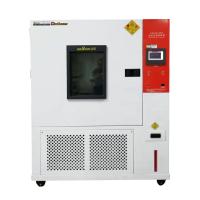
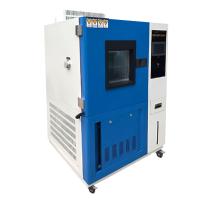
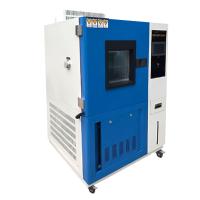
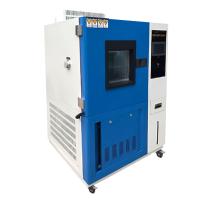
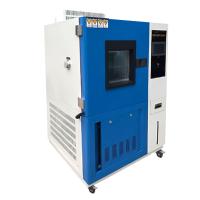
The application of the high-low Temperature Test Chamber in the high-low temperature resistance test of automobile glass and its test steps are as follows:
application
The high-low Temperature Test Chamber can be used for high-low temperature resistance tests of automotive glass to test the stability and durability of glass materials in high-low temperature environments. This type of testing simulates the use of cars in extreme climatic conditions to ensure that glass materials perform as required.

experiment procedure
Prepare samples: select appropriate glass samples according to relevant standards or requirements.
Place the sample: place the sample in the high-low Temperature Test Chamber, and pay attention to avoid mutual contact and coverage between the samples.
Set temperature: According to the test requirements, set the temperature values of high temperature and low temperature, generally the high temperature is 50°C to 80°C, and the low temperature is -40°C to -70°C.
Setting time: According to the test requirements, set the duration of high temperature and low temperature, generally 24 to 72 hours.
Start the test: start the high-low Temperature Test Chamber and start the test.
Observe the sample: After the test, observe the state of the sample, record and analyze any changes.
Result analysis: analyze according to the test results to determine whether the high-low temperature resistance performance of the glass material meets the requirements.
North and South Chao reminds you: When conducting high-low temperature tests on glass, care should be taken to avoid mutual contact and coverage between samples, so as not to affect the test results. At the same time, it is also necessary to ensure the uniformity and stability of the temperature in the Test Chamber, thereby ensuring the reliability of the test results.