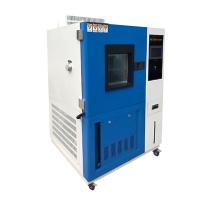
Alarm is a common safety device, widely used in fire alarm, burglar alarm and other occasions. In actual use, the alarm may encounter different temperature conditions, such as high temperature, low temperature, temperature changes, etc. Therefore, high-low temperature resistance tests are required to evaluate the performance and reliability of the alarm under different temperature conditions. The high temperature test can test the performance indicators such as the stability, accuracy, and response time of the alarm in a high temperature environment, while the low temperature test can evaluate its working conditions in a low temperature environment, such as start-up time, response sensitivity, etc. The temperature change test can simulate the environmental changes at different temperatures to evaluate the stability and reliability of the alarm. Through these tests, the normal operation of the alarm under different temperature conditions can be guaranteed, its reliability and stability can be ensured, and the service life and safety performance of the alarm can be improved.
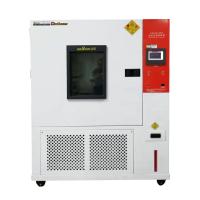
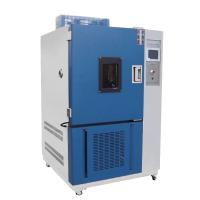
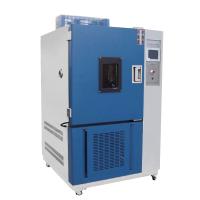
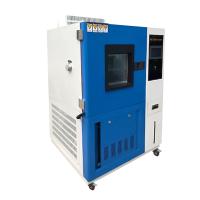
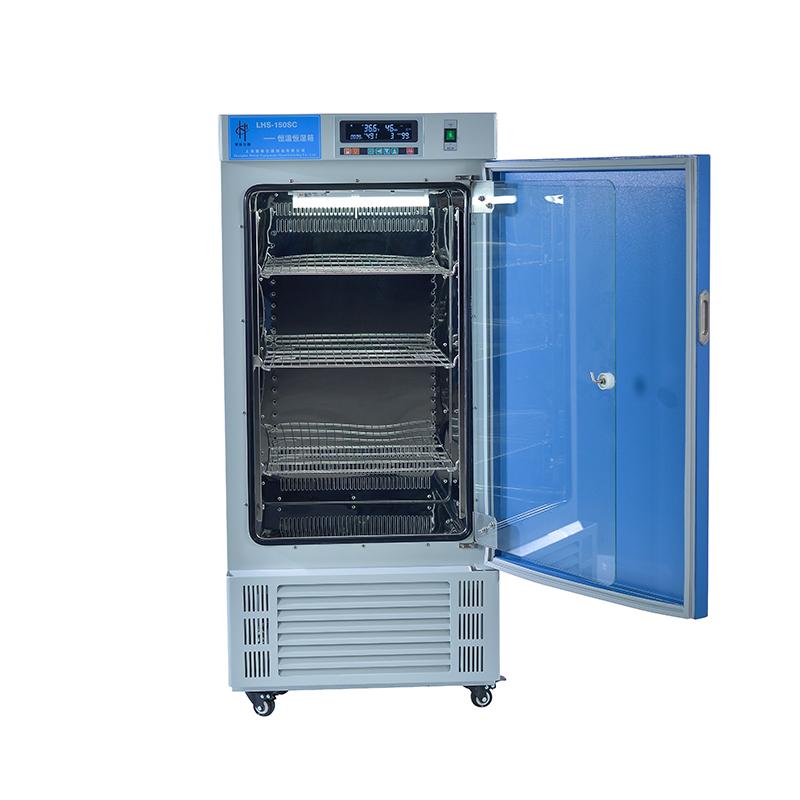
High-low Temperature Test Chambers are often used to simulate the use of products in extreme temperature environments to determine their performance and reliability. In the high-low temperature resistance test, the high-low Temperature Test Chamber can be used to test the performance of products under extreme temperatures, such as high temperature resistance, low temperature resistance, performance changes under temperature changes, etc. The alarm is used to monitor whether the internal temperature of the Test Chamber exceeds the set upper and lower limits, thereby ensuring the reliability of the test.
experiment method
The following are the test steps of the high-low Temperature Test Chamber in the high-low temperature resistance test of the alarm:
Preparations: Check whether the Test Chamber and alarm are working properly. According to the test requirements, set the temperature range and heating/cooling rate of the Test Chamber, and set the upper and lower limit temperatures of the alarm.
Sample installation: place the product to be tested in the test box, and pay attention to the installation position and direction.
Test operation: open the Test Chamber and start the temperature control program to control the temperature of the Test Chamber to increase or decrease within the set range. Also, turn on the alarm and make sure it is working properly. During the test, record the temperature change inside the test box, and pay attention to observe the performance change of the product to be tested.
Alarm processing: If the internal temperature of the Test Chamber exceeds the upper and lower limit temperature set by the alarm, the alarm will send out an alarm. At this time, the test box should be stopped in time, find out the cause of the failure, and take corresponding measures. If the temperature inside the Test Chamber returns to the normal range, the test can be continued.
End of test: After the end of the test, turn off the Test Chamber and alarm, and record the test results and temperature curve. According to the test results, evaluate the performance and reliability of the product in high-low temperature environments, and make corresponding conclusions.
North and South Chao reminds you: the test box needs to be preheated or cooled before the test, so as to ensure that its internal temperature reaches the set temperature range. At the same time, during the test, the working status of the test box and the alarm should be checked regularly to ensure the reliability and accuracy of the test.