Baking varnish is a surface treatment technology widely used in automobiles, electronic products, furniture and other fields, and it needs to have good high-low temperature resistance. The high-low temperature resistance test is to verify the stability and durability of the baking paint at extreme temperatures. In high temperature environments, baked varnishes may suffer from cracking, peeling, fading, etc., while in low temperature environments, baked varnishes may become brittle and susceptible to physical and chemical damage. Through the high-low temperature resistance test, it is possible to evaluate the performance of baking paint under different temperature environments, determine its service life and durability in various extreme environments, and provide high-quality surface treatment for the production of automobiles, electronic products, furniture and other fields technology.

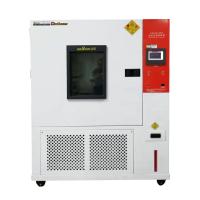
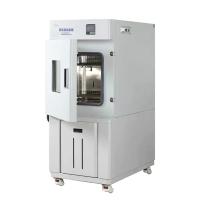
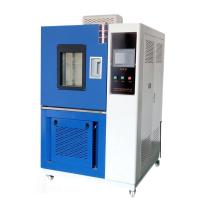
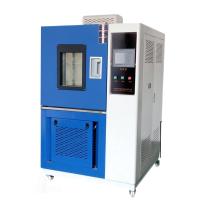
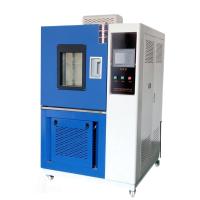
The high-low Temperature Test Chamber can be used for high-low temperature resistance tests of baking varnishes to test the performance and reliability of baking varnishes in high-low temperature environments. The following are the test steps of the high-low Temperature Test Chamber in the high-low temperature resistance test of baking paint:
Preparation: Check whether the Test Chamber and temperature controller are working normally, and set the temperature range and heating and cooling rate of the Test Chamber according to the test requirements. Prepare paint samples for baking, noting their size and location.
Sample installation: place the paint sample to be tested in the Test Chamber, and fix the position and direction.
Test operation: Turn on the Test Chamber and temperature controller, and set the temperature range and heating and cooling rate of the Test Chamber. Raise the temperature of the Test Chamber to the set temperature range, keep it for a period of time, and then cool down to the set temperature. During the test, record the temperature change inside the Test Chamber, and pay attention to observe the performance change of the paint sample.
Evaluation of test results: After the test, take out the paint sample and observe whether there is deformation, peeling, cracking and other phenomena in its appearance. At the same time, the adhesion, hardness and other parameters of the baking paint are tested and evaluated. Through the evaluation of the test results, the tolerance and stability of the baking paint in high-low temperature environments can be judged.
Beichao reminds you: the paint should be cleaned and dried before the test, so as not to affect the test results. During the test, the temperature range and heating and cooling rate inside the Test Chamber should be strictly controlled to ensure the accuracy and reliability of the test. At the same time, the Test Chamber should be cleaned and maintained after the test to prolong its service life.