Waterborne epoxy resin is an environmentally friendly Coating material with good adhesion and anti-corrosion performance, which is widely used in construction, automobile, electronics, aviation and other fields. Because the waterborne epoxy resin coating may be affected by different temperatures during use, for example, high temperature will cause the resin coating to soften and deform, low temperature will cause the resin coating to become brittle, and even check and fall off, thus affecting the performance and mass of the coating. Therefore, it is necessary to carry out high-low temperature resistance tests to test the adhesion, Hardness, wear resistance, corrosion resistance and other performance of waterborne epoxy resin coating under different temperature conditions, so as to evaluate its applicability and reliability in various application scenarios. Provide reference and guarantee for product development and production.
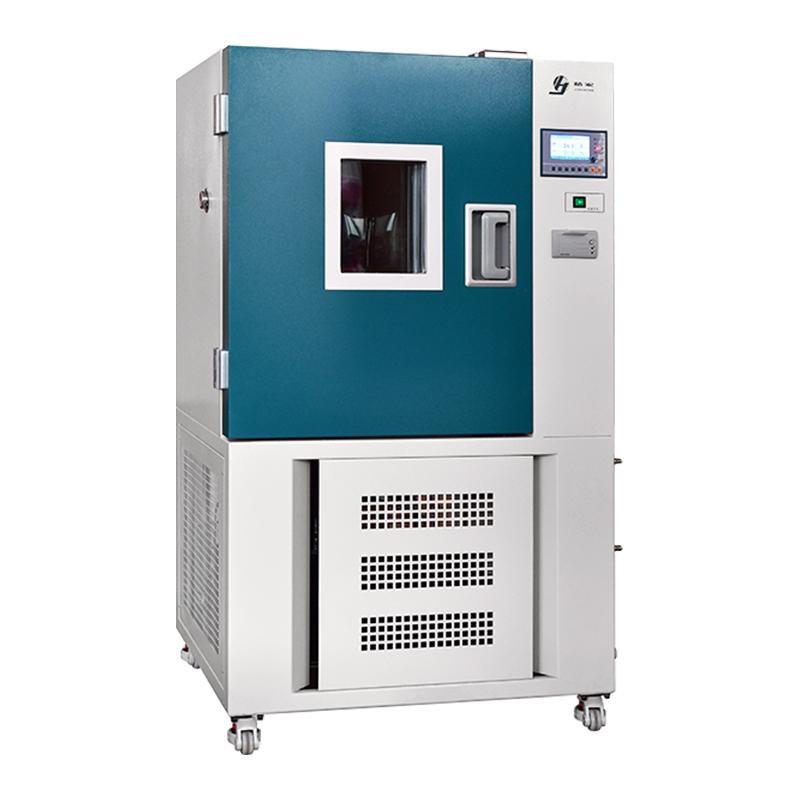
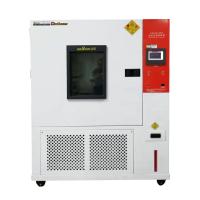
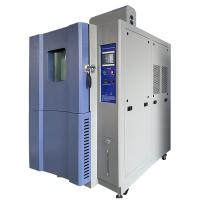
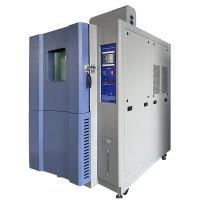
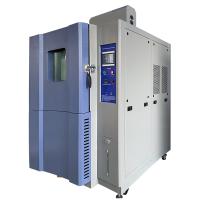
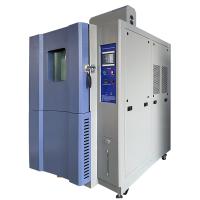
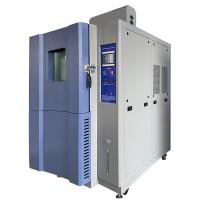
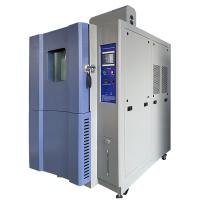
The low/high Temperature Test Chamber can be used for the high-low temperature resistance test of waterborne epoxy resin to evaluate its performance and stability in extreme temperature environments. The following are the general high-low temperature resistance test steps of waterborne epoxy resin:
Sample preparation: According to the test standard or product specification, prepare an appropriate amount of aqueous epoxy resin sample, and add curing agent according to the specified ratio, and mix well.
Sample paving: Pave the mixed sample to the specified Film thickness and place it in a ventilated place to dry naturally until it is completely cured.
Sample Cutting: Using a cutting tool, cut the cured sample to the appropriate size and shape to fit the size of the Test Chamber.
Temperature program setting: Set the temperature program according to the test standard or product specification, generally need to carry out high-low temperature cycle test, such as heating up from room temperature to set high temperature, keep it for a certain period of time and then cool down to set low temperature, keep it for a certain period of time and then return to normal temperature.
Loading: Place the sample in a low/high Temperature Test Chamber and gradually increase or decrease the temperature according to standard procedures.
Test process monitoring: During the test process, the temperature change of the sample can be monitored in real time using a temperature transducer or an infrared thermometer.
After the test is completed, the sample is taken out for evaluation: After the test is completed, the sample is taken out for evaluation, and the performance stability of the sample can be evaluated by observing the appearance change, measurement of physical performance, chemical properties and other methods.
Because the waterborne epoxy resin may swell and bubble at high temperature, special treatment of the sample, such as preheating or vacuum treatment, is required during the high temperature test to avoid abnormalities in the sample.