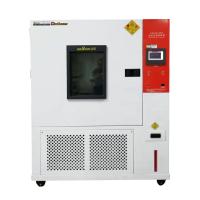
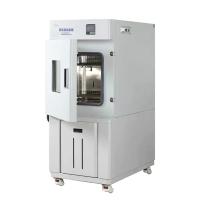
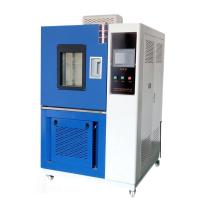
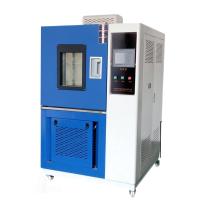
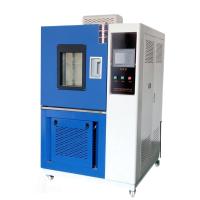
Butadiene-isoprene rubber is a common elastic material widely used in automotive, electronics, medical and other fields. During use, butyl-isoprene rubber products may be affected by different environmental conditions such as high temperature and low temperature. For example, high temperature may cause the hardness of the rubber material to decrease, and low temperature may cause the rubber material to become brittle and shrink, thus affecting its physical properties. and mechanical properties. Therefore, it is necessary to conduct high-low temperature resistance tests to test the tensile strength, elongation at break, hardness, wear resistance, oil resistance and other performance of butadiene rubber products under different temperature conditions, so as to evaluate its performance in various application scenarios Under the applicability and reliability, it provides guarantee for product development and production. The high-low Temperature Test Chamber can provide a constant temperature and humidity environment to simulate different environmental conditions to test the high-low temperature resistance of butadiene rubber.

experiment procedure
Preparing Specimens: Preparing samples of Isoprene rubber, usually using standard size samples for testing.
Adjust the high-low Temperature Test Chamber: adjust the temperature and humidity settings of the high-low Temperature Test Chamber according to the test requirements, and put the sample into the Test Chamber.
Record data: During the test, record the temperature and humidity changes inside the Test Chamber, as well as the changes of the sample.
Check the sample: After the test is completed, take out the sample and check whether there is any change in its surface and structure to evaluate its high-low temperature resistance.
Beichao reminds you: the test conditions should be set according to relevant standards or specific requirements, so as to ensure the accuracy and comparability of test results.