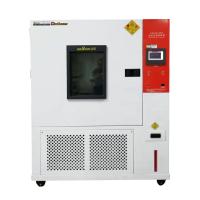
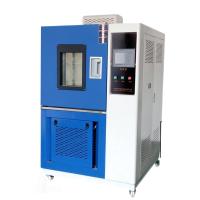
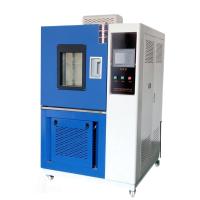
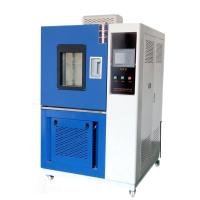
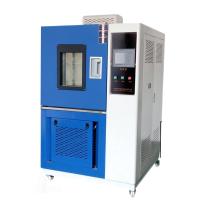
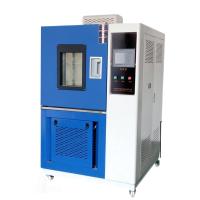
The high-low Temperature Test Chamber can be used for high-low temperature environment testing of rubber sealing materials of gear bearings to verify its stability and performance under extreme temperature conditions. The following is the application and test procedure of the high-low Temperature Test Chamber in the high-low temperature resistance test of the rubber sealing material of the cone bearing.
application:
The application of the high-low Temperature Test Chamber in the high-low temperature resistance test of the rubber sealing material of the cone bearing includes:
High temperature test: place the rubber sealing material in a high temperature environment to simulate high temperature climate conditions and test its thermal stability and heat resistance.
Low temperature test: place the rubber sealing material in a low temperature environment to simulate cold weather conditions and test its cold resistance and softness.
Temperature cycle test: place the rubber sealing material in a high-low temperature cycle environment to simulate temperature changes and test its deformation and damage.
experiment procedure:
The test steps of the high-low Temperature Test Chamber in the high-low temperature resistance test of the rubber sealing material of the cone bearing are as follows:
Preparation: Put the rubber sealing material to be tested into the high-low Temperature Test Chamber. Before placing, it is necessary to ensure that the rubber sealing material has removed residual heat or moisture, and anti-static measures are taken.
Set test conditions: Set test conditions for high temperature, low temperature or temperature cycle according to actual needs. These conditions include temperature range, rate of temperature change, soak time, etc.
Start the test: Start the high-low Temperature Test Chamber according to the set conditions and start the test. During the test, the high-low Temperature Test Chamber will automatically control the temperature and perform high-low temperature cycles within the set temperature range.
Monitoring: During testing, the rubber sealing material needs to be monitored to ensure its performance in high-low temperature environments. The monitoring parameters include the shape, mechanical properties, elastic modulus, hardness, etc. of the rubber sealing material.
End the test: When the test is completed, close the high-low Temperature Test Chamber and take out the test equipment. Data analysis and evaluation is then carried out.