Environmentally friendly plasticizer is an environmentally friendly additive used in the production of plastic products. It is usually added to plastics to improve their properties such as flexibility, processability, and cold resistance. Since environmentally friendly plasticizers need to chemically react with plastics to function, they need to withstand high temperature and high pressure environments during the production process to ensure that they are effectively added to plastics. In addition, plastic products added with environmentally friendly plasticizers also need to maintain stable performance and structure under different temperatures and environments, so high-low temperature resistance tests are required to test their durability and aging resistance under different temperatures and environments Indexes such as resistance, mechanical strength and physical properties. Through high-low temperature resistance tests, the stability and reliability of environmentally friendly plasticizers in plastic products can be evaluated, providing a scientific basis for the design and manufacture of plastic products, and ensuring their service life and environmental adaptability in different applications .
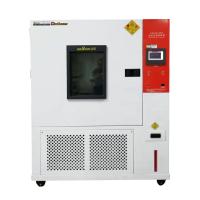
High-low Temperature Test Chambers are usually used to test the high-low temperature resistance of environmentally friendly plasticizers. Its main application is to evaluate the performance stability of environmentally friendly plasticizers in extreme temperature environments in order to guarantee their service life and performance in practical applications.

experiment method
The following are the general steps of the high-low temperature resistance test of environmentally friendly plasticizers:
Prepare samples: select a certain amount of environmentally friendly plasticizer samples according to the experimental requirements, and ensure that their quality is stable. Samples are placed in airtight containers and pre-treated to remove any impurities or residues that may affect test results.
Set test conditions: According to the test requirements, set a certain test temperature and time in the high-low Temperature Test Chamber. The test temperature is generally between -40°C and 120°C, and the time is determined according to the experimental requirements.
Start the test: Place the sample in the high-low Temperature Test Chamber and start the test. During the test, the performance and appearance changes of the sample should be checked regularly to evaluate its high-low temperature resistance.
Data analysis: After the test, analyze the performance and appearance of the sample, and record the data. According to the data results, the high-low temperature resistance performance and stability of the samples were evaluated.
Conclusion: Draw a conclusion based on the test results, evaluate the performance stability of the sample and determine its applicability in practical applications. If the sample shows good performance stability, it can be used in practical applications. If a sample exhibits poor performance stability, its formulation needs to be further improved and optimized.