Automobile booster assembly is one of the important parts of automobile power system. It helps the driver to control the vehicle more easily when turning by increasing the torque of wheel rotation. During the use of the automotive booster assembly, it may encounter different ambient temperatures, such as high temperature in summer and low temperature in winter, etc. Different temperatures have different effects on its performance and life. In order to ensure that the automotive booster assembly can still work normally under various extreme temperature conditions, high-low temperature resistance tests are required to test its performance in high temperature and low temperature environments such as pressure, flow, noise, leakage, and durability. And then guarantee its reliability and safety in actual use.

experiment method
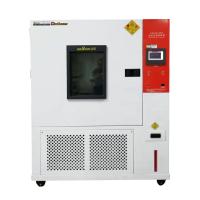
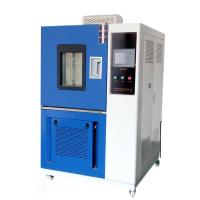
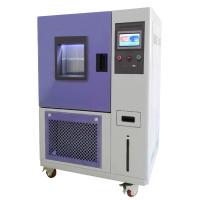
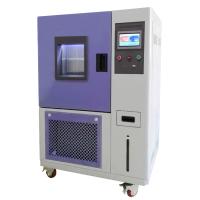
The high-low Temperature Test Chamber can be used to test the high-low temperature resistance performance of the automobile booster assembly to ensure the reliability and stability of the booster at different temperatures. The following are the high-low temperature resistance test steps of the automobile booster assembly:
Put the booster assembly into the high-low Temperature Test Chamber, and set the temperature in the chamber to a high temperature within the required temperature range.
After keeping it at a high temperature for a period of time, adjust the temperature to a low temperature range and keep it for a certain period of time.
Repeat step 1 and step 2 continuously until the number of cycles required by the test is reached.
During the test, observe the working state of the booster assembly, including steering resistance, noise, etc., and record the data.
After the test, the booster assembly is taken out and subjected to visual inspection and functional test to evaluate whether its high-low temperature resistance performance meets the requirements.
NBCHAO reminds you: Different types of automotive booster assemblies may have different high-low temperature resistance test requirements and parameter settings, so you should understand the test standards and specifications in detail before conducting the test, and conduct the test according to the requirements.