A capacitor is an electronic component commonly used in circuits, which plays a role in storing and releasing electrical energy in the circuit. In actual use, capacitors may encounter different ambient temperatures, such as high temperature in summer and low temperature in winter, etc. Different temperatures have different effects on their performance and life. In order to ensure that the capacitor can still work normally under various extreme temperature conditions, high-low temperature resistance tests are required to test its performance in high temperature and low temperature environments, such as capacity, dielectric loss, and leakage current, so as to ensure its performance in actual use. reliability and stability. At the same time, capacitors may undergo physical or chemical changes in high-temperature or low-temperature environments, and may even be damaged or fail. Therefore, high-low temperature resistance tests can also help manufacturers find potential problems in capacitors and improve product quality and reliability.
experiment procedure
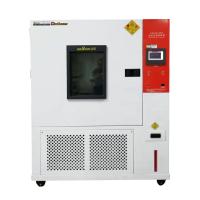
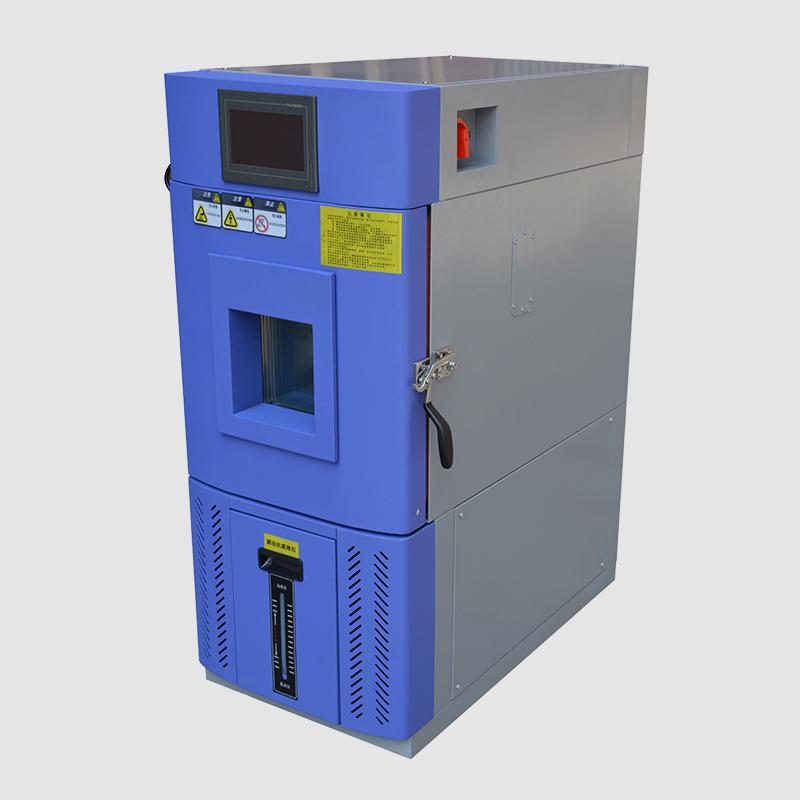
The high-low Temperature Test Chamber can be used for high-low temperature resistance tests of capacitors to evaluate the temperature performance and reliability of capacitors. The following are the test steps:
Prepare test samples: Select a certain number of capacitors as test samples, make sure they meet specifications, and label them for identification.
Stable environment: Set the temperature of the Test Chamber to room temperature and wait for the temperature inside the chamber to stabilize.
High temperature test: Put the test sample into the Test Chamber, raise the temperature inside the chamber to a specified high temperature (usually 85°C, 105°C or 125°C), and keep it for a certain period of time (usually 1000 hours).
Low temperature test: Lower the temperature in the box to a specified low temperature (usually -40°C or -55°C) and keep it for a certain period of time (usually 1000 hours).
Restore the environment: Return the temperature of the Test Chamber to room temperature and wait for the temperature of the sample to stabilize.
Evaluation of test results: After the test, measure and record the capacitance and loss tangent of each capacitor. Evaluate the reliability and temperature performance of each capacitor by comparison with the initial value.
Precautions
When conducting the high-low temperature resistance test of capacitors, the corresponding standards and specifications should be followed to ensure the accuracy and repeatability of the test. In addition, care should be taken to protect the safety of test equipment and operators.