Salt spray test (salt spray test) is one of the main methods of artificial accelerated corrosion test to test the corrosion resistance of coatings. It simulates the atmospheric conditions of the coastal environment to conduct rapid corrosion tests on the coating, mainly to evaluate the coating quality, such as whether the porosity and thickness meet the requirements, whether the coating surface has defects, and the quality of pre-coating or post-coating treatment. It is also used to compare the performance of different coatings against atmospheric corrosion. According to the solution composition and conditions used in the test, the salt spray test is divided into three types: neutral salt spray test (Nss), acid salt spray test (Ass) and copper salt accelerated acid salt spray test (cAss). method.
The neutral salt spray test is a standardized international general standard test, which is carried out according to the method specified in the IS03768 standard. This method stipulates a standardized test procedure, from sample preparation, processing method, test process to result evaluation are carried out in accordance with the regulations. Pre-test the sample or test piece according to the specified requirements, including surface cleaning, sample sealing, etc., and record the size and appearance. Then place it in a standard test box according to a certain arrangement method, cover the box cover, and start the machine. At this time, the nozzle in the box will atomize the neutral saline solution and spray it out at a certain angle and flow at regular intervals, so that the box is full. For salt spray, the test process takes a certain test time as a cycle, and after several cycles of tests according to requirements, the samples are treated and rated after the test.
1. Method principle
The salt spray test is to simulate the coastal atmospheric environment, the warm sea faces the cold air evaporation and the tiny liquid liquid containing chlorine splashed into the space under the impact of waves, forming a fine mist medium to corrode the metal, using a certain concentration of chloride Sodium solution is sprayed in the form of fine mist under pressure, and the sub-mist particles evenly fall on the surface of the sample, and continuously maintain the liquid film renewal, so the corrosion of the coating conforms to the basic principle of atmospheric corrosion, and the accelerated corrosion of the measurement coating is realized. effect.
After all, the salt spray test cannot perfectly simulate the corrosion of metals by atmospheric conditions. In addition, there are many factors that affect corrosion, which makes the test conditions difficult to control, etc., and the reproducibility is often poor. Therefore, it can only be used as the same type of coating under this condition. Comparison of relative corrosion resistance. Practice shows that it has a good corrosion resistance effect on anodic coatings (such as zinc and cadmium layers on steel substrates, etc.), while for cathodic coatings, it can only reveal the porosity and defect degree of the coating, indirectly Reflects the corrosion resistance of the coating.
2. Overview of test equipment
There are two types of salt spray test: salt spray chamber and salt spray chamber.
1) Test equipment and requirements The salt spray chamber is suitable for small-sized samples, and the salt spray chamber is suitable for two large or special samples. At present, various types of salt spray chambers are widely used for testing.
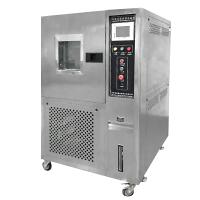
The internal structure of the salt spray box is shown in Figure 11_3_3 and 11_3_4. Regardless of whether it is a salt spray chamber or a salt spray chamber, its design must meet the following basic requirements.
(1) The internal structure of each equipment shall be made of corrosion-resistant materials that do not affect the performance of the salt spray test, including the inner lining of the box, the sample holder and various parts that are in contact with the test solution. The box should have good insulation measures.


(2) In the air supply system, an air degreasing and dust removal device and a saturation tower for humidified air shall be installed. The temperature of the water in the saturation tower shall be determined according to the pressure and nozzle type used, and shall generally be higher than the test temperature. The water level in the tower should be kept at a certain height.
(3) There should be baffles and other facilities in the box to prevent the salt mist from being directly sprayed on the surface of the sample, and the uniformity of fog reduction can be adjusted through the angle of the baffles.
(4) Condensation on the top of the box cover or the spray chamber. The saline solution shall not be dripped on the sample, and the droplets falling from the four walls of the equipment shall not be reused.
(5) The temperature, pressure, and brine supply during spraying should be well controlled to ensure stable test conditions.
(6) Subject to compliance with the above requirements, the size and construction of the equipment are not limited.
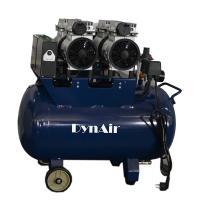
2) The structural principle of the equipment The whole set of equipment is composed of three parts: the box body, the electrical console, and the compressor.
Between the interlayer and the working room is a heating air duct, and the lower part is equipped with a heater to heat up the working room. The combination of the box cover and the box body adopts a water seal type to ensure good airtightness. The compressed air produced by the Air Compressor is purified after passing through the oil-water separator and the pressure regulating valve, and the purified compressed air enters the nozzle through the air injection pipe after being preheated.
The brine in the brine tank enters the brine preheater through the brine white dynamic replenisher, and the preheated brine enters the nozzle through the suction pipe, and becomes salt mist sprayed into the working room under the action of compressed air. During the spraying process, the exhaust gas is discharged from the exhaust pipe, and the salt water recovery pipe after the action is discharged into the recovery box to ensure continuous and normal spraying in the box. The temperature and pressure in the salt spray test are all controlled by the electrical control box.
3. Test solution composition
1) Neutral salt spray test test solution
(1) 3% sodium chloride (Nacl) solution
(2) 5% sodium chloride (Nacl) solution
(3) 20% sodium chloride (Nacl) solution
(4) Artificial seawater solution
氯化钠(NaCl) 27g/L
氯化镁(MgCl2) 6g/L
氯化钙(CaCl2) lg/L
氯化押 (KCl) lg/L
各种溶液均用化学纯试剂和蒸馏水配制, 并用化学纯的盐酸或氢氧化钠调整溶液pH至7.0±0.2,,上述试液中,通常采用5%氧化钠溶液者为多,,2)酷酸盐雾试验测试溶液 5%Nacl溶液,用i7K酷酸调整 pH为3.2±0.1,配制测试溶液均用化学纯试剂及蒸馏水,,3)铜盐加速酷酸盐雾试验测试溶液 5%NaCl溶液,每升 NaCl溶液中加入 0.26±o.o2gcucl2·H30,用i7K酷酸调整 pH为3.2± o.1,配制测试溶液均用化学纯试剂及蒸馏水,
4.试验条件
1)温度 (35±2)℃,
2)相对湿度 大于95%,达不到此要求时,可在箱底适当加水, 以补充箱内空间水分,(相关仪器:恒温恒湿试验箱)
3)降雾量 降雾量〔1~2mL/ (h·80cm2))的测定方法:将四个集雾器(可用直径为10cm;截面积为80cm2的玻璃漏斗,通过塞于插入量筒或通过管子导出箱外集雾器中)放置在箱内不同部位,其中一个需靠近喷嘴,开动盐雾箱连续喷雾8小时,计算8ocm2 的集雾器每小时平均降雾的毫升数,
4)雾粒直径 1~5µm的占85%以上,雾粒直径的测定方法;取一20cmx50cm的薄玻璃片, 涂上一层均匀的凡士林或石蜡, 用显微镜检査 (玻璃片表面上不得有气泡、污物)后,将玻璃片放在玻璃培养皿中加盖,放置于箱内测试位置上,待连续喷雾5分钟后,取掉培养皿盖子,让盐雾在玻璃片上沉降3o秒种,再加上盖子,并取出箱外,取出玻璃片,在显微镜下(放大3oo~1ooo倍)测出玻璃片上固定位置内雾粒的直径,并统计百分率。
5)喷嘴压力 0.8~ 1.4kg/cm2。
6) 喷雾时间 按不同要求常用两种方法。
每天连续喷8小时,停喷16小时, 24小时为一个周期。停喷时不加热,试样密封在箱内自然冷却 。
5.试样准各及进箱要求
(1) 取样要求按检验标准规定进行 。
(2)试样的数量按测试具体规定, 一般情况下每批取3件。
(3)试样进箱前需要进行预处理,除去表面油污、脏物。净化处理时一般可用1:4 的二甲苯_酒精溶液捺试试样表面, 但不应损伤涂层或表面钝化膜。
(4)试样进箱时可垂直悬挂在箱内(需要用塑料丝吊挂),或以15°~3o°角放置于试样架上, 试样表面应与盐雾在箱内流动主要方向平行。 外形复杂的试样放置角度较难规定,但要求重复测试时放置一致。试样的间距一般不小于100mm,试样上下层需要交叉放置。
(5)试样在试验结束后,应小心地用冷水洗净表面盐沉积物,经干燥后作外观检査和评级 。
6.测试步骤和注意事项
(1) 试验箱应放置平稳, 开箱后应用清水洗净工作室, 并检査设备管路和电路是否符合要求。
(2)所有加水部位都应按要求加水。
①空气饱和器内应加入蒸馏水, 水位至玻璃管上端的红线 。
②盐水预热器内应加水至上端红线, 使容器内电加热管全部浸入水中, 使用时应保证水位不低于下端红线, 防止电加热管烧毁 。
⑧箱体密封水槽内应加入自来水, 保证密封良好。
④工作室底部应保持10mm 左右高度水位, 进而保证箱内湿度。
(3) 检査工作室内喷雾嘴, 调节好防雾量大小 。
(4) 按要求将准备好的试样放入工作室内试样架上。
(5)空压机压力控制在2~6kg范围, 检査自控是否正常。
(6)通过调压阀控制空气饱和器压力在2kg左右。
(7)工作室温度控制在35℃, 盐水预热温度控制在35℃, 空气饱和器温度控制在6o℃左右, 检査温度自控是否正常 。
(8)进线电源用三相四线橡皮线,按接线板o、1、2、3位置接线。
(9)盖好箱盖,检査水封是否密闭。
(1o)开启“自动”按钮,指示灯亮表示电源接通,同时电压表有指示。再把控温仪拨到“开”位置,白灯亮表示开始加温,到达控制温度后白灯灭,红灯亮。
(11) When the temperature is turned on before spraying, the compressor needs to be turned on first, and the valve of the brine tank is opened. After the brine is preheated to the specified temperature, the spray can start.
(12) If observation is required during the test, the "lighting" switch can be turned on, and it will be turned off after observation.
(13) After the test, the air in the saturator should be exhausted to prevent the water in the saturator from flowing back.
(14) When the test is stopped for more than 5 days, the solution needs to be exhausted, and the working chamber and nozzles and other components should be effectively cleaned with water to keep the inside and outside clean.
7 Evaluation of corrosion results of salt spray test
According to my country's tropical electrical products, JB/z88-66 evaluation standard, the degree of corrosion after the salt spray test is 4 grades, grade 1 is good, grade 2 is qualified, grade 3~4 is unqualified. In each level, as long as one item is satisfied, it will be evaluated according to that level. The details are shown in Table 11_3_3.