The corrosion paste test (CORR) is an alternative artificially accelerated corrosion test method for determining the corrosion resistance of coatings. This method simulates the corrosion conditions of sludge and rainwater in industrial cities, and performs rapid corrosion tests on coatings. It has the advantages of good reproducibility, simple test and short test period. The corrosion effect of the corrosion paste test is more consistent with the atmospheric corrosion. According to reports, the corrosion paste test has a coincidence rate of 93% with the industrial atmosphere, 83% with the marine atmosphere, and 70% with the rural atmosphere. Except for special circumstances, the corrosion effect of the stipulated corrosion period of 24h is equivalent to the corrosion of the urban atmosphere for one year, or the corrosion of 8-10 objects in the ocean atmosphere. Therefore, this method is gradually being widely used at home and abroad recently.
This method is applicable to the corrosion performance test of decorative cathodic coatings (such as Cr, Ni_Cr, Cu_Ni_Cr, etc.) on steel, zinc alloy, and aluminum alloy substrates.
1. Method principle
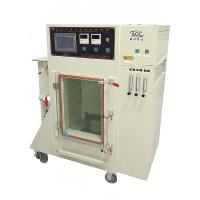
In this test, a corrosion paste prepared by adding corrosion salts such as copper and iron to kaolin was used to coat the surface of the coating of the sample to be tested, and after natural drying, it was placed in a Humidity Chamber with a high relative humidity (the specifications and technical requirements The corrosion test is carried out in the same as the damp heat test), and after the specified time is reached, the sample can be taken out and cleaned and dried properly before inspection and evaluation.
The main corrosion salts in the corrosion paste and their corrosion characteristics are: trivalent iron salts cause stress corrosion of the coating; copper salts can cause pitting corrosion, cracks, peeling, and chipping of the coating; the presence of chlorides can accelerate coating corrosion. Corrosion effect of the layer.
2. Preparation of corrosion paste

2) Preparation method
(1) Dissolve 2.5 g of copper nitrate in water and dilute to 500 mL;
(2) Dissolve 2.5 g of ferric chloride in water and dilute to 500 mL (this solution should not be stored for more than 14 days);
(3) Dissolve 50 g of ammonium chloride in water and dilute to 500 mL
(4) Take 7 mL of copper nitrate solution prepared above, 33 mL of ferric chloride solution, and 10 mL of ammonium chloride solution, mix well, add 30 g of kaolin, stir with a glass rod for 2 minutes, and then form a paste for the test things.
All the above solutions were prepared with distilled water. The corrosion paste should be prepared and used immediately during the test. The corrosion paste prepared once above can be used to coat a 3m2 sample surface.
3. Test method
(1) Use xylene-alcohol solvent to wipe off the oil and dirt on the surface of the test sample, but it should not damage the coating or produce a protective film.
(2) Dip the corrosion paste with a cleaning brush and apply it in a circular motion on the surface of the sample. After the surface of the sample is coated with the corrosion paste, use a brush to gently brush it in one direction and make it smooth. The thickness is about 0.05~0.1mm, and it is placed at room temperature and dry air for 1 hour.
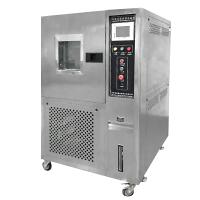
(3) After 1 hour, move the sample to a constant temperature and humidity Test Chamber for corrosion. The corrosion test conditions control the temperature at 38°C±1°C, the relative humidity at (94±4)%, and no condensation occurs. 24 hours is 1 cycle.
(4) The test period and number of cycles shall be specified in the technical conditions of the product. If it is necessary to test for more than two cycles, after the end of the first cycle, wash the ointment on the surface of the sample with water and sponge, and then use the same method to apply ointment and corrosion, and so on until the end.
4. Evaluation of test results
(1) For coatings on iron and steel parts, when the sample is dry, directly check the size and number of rust spots appearing in the mud paste. If you need to check the appearance damage, you can wash the plaster with water and sponge, and check the gloss and cracking of the coating after drying
(2) For the coating on the zinc alloy or aluminum alloy substrate, clean the mud paste with clean water and sponge, and check the appearance gloss change, cracking degree and corrosion spots of the substrate metal after drying.
(3) Evaluate according to the corrosion degree of the coating:
Good No or no noticeable change in coating.
Qualified The gloss of the coating is dark, and only scattered and small rust spots, spots, and fine cracks appear on the surface.
Unqualified The coating is dull, and the surface has serious corrosion, cracks and coating peeling off.
The evaluation of the results after the corrosion paste test can also be based on the corrosion rate of the coating surface, and the specific evaluation method is the same as the evaluation of the corrosion results of the cAss method.