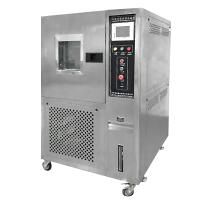
The oxygen sulfide test is a method of artificially manufacturing an air medium containing H2s to conduct a corrosion test on the coating. This method is only used for the corrosion test of silver plating or silver plating with a protective layer in an atmospheric medium containing H2s.
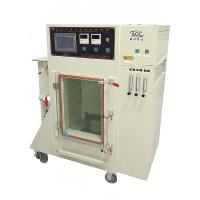
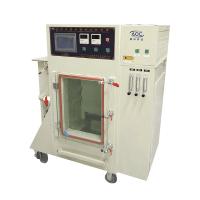
The hydrogen sulfide test is usually carried out in the Test Chamber, using a temperature control and decompression device to directly generate H2s gas, mix it with air, and then pass it in, so that the coating on the sample will undergo a corrosion reaction at a certain temperature, pressure, and concentration. In order to achieve the evaluation of the corrosion resistance of the coating against hydrogen sulfide industrial atmosphere.
The test conditions of the hydrogen sulfide test shall be controlled as follows:
Temperature 25℃±2℃
Relative humidity 75%±5%
H2s concentration (10~15) x10-6 (volume ratio)
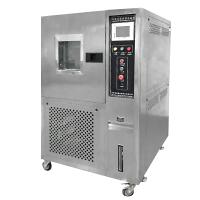
The equipment for the hydrogen sulfide test is the same as that for the sulfur dioxide test. Only H2s gas is generated in the gas generator. If the requirements are not too high, the hydrogen sulfide test can also be carried out in a desiccator. That is, store water at the bottom of the desiccator to maintain the relative humidity in the desiccator (close to about 75%), then put a beaker containing an appropriate amount of sodium sulfide (Na2s) into the desiccator, and then inject a certain amount of sodium sulfide from the separatory funnel. Sulfuric acid (H2s04) was used to generate H2s gas (concentration controlled at 0.3% ~0.5%) to react with the sample to assess its corrosion resistance. (Related instruments: constant temperature and humidity Test Chamber)
The evaluation after the hydrogen sulfide test may be carried out with the sulfur dioxide test.