Circuit boards are an important part of modern electronic equipment, and usually need to operate for a long time in high temperature, high humidity, humidity and other environments. To ensure the board's performance and reliability in these harsh environments, a damp heat test is required.
The humidity and heat resistance test can simulate the long-term operation of the circuit board in high temperature, high humidity, humidity and other environments, and test the performance and reliability of the circuit board under these conditions. Specifically, the damp heat resistance test can test the electrical properties, mechanical properties, chemical properties and other aspects of the circuit board.
In terms of electrical performance, the damp heat resistance test can test the electrical performance indicators such as the insulation performance, dielectric constant, resistivity, and capacitance of the circuit board to evaluate the electrical performance of the circuit board in a humid and high temperature environment.
In terms of mechanical properties, the damp heat test can test the mechanical strength, durability, corrosion resistance and other mechanical performance indicators of the circuit board to evaluate the mechanical performance of the circuit board in a humid and high temperature environment.
In terms of chemical properties, the damp heat resistance test can test the durability, chemical stability and other chemical performance indicators of circuit board materials to evaluate the chemical stability of circuit boards in humid and high temperature environments.
Through the damp heat resistance test, the performance and reliability of the circuit board in a humid and high temperature environment can be evaluated, thereby guiding the design and manufacture of the circuit board. At the same time, the humidity and heat resistance test is also an important means for circuit board manufacturers to carry out quality control and product certification.

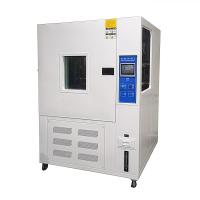
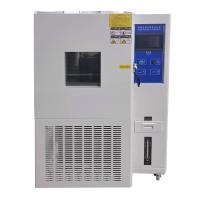
The constant temperature and humidity Test Chamber is widely used in the damp heat performance test of circuit boards. Circuit boards are prone to corrosion, oxidation and other problems in high-temperature and high-humidity environments, which affect their performance and life. Therefore, the damp heat performance test using the damp heat Test Chamber can simulate the real environment and evaluate the durability and reliability of the circuit board.
experiment method
The test method generally includes the following steps:
Place the circuit board to be tested in the damp heat Test Chamber, and set the temperature and humidity parameters.
The constant temperature and humidity test is carried out within the specified time, and the commonly used test time is 48 hours or 96 hours.
After the test, take out the circuit board for observation and inspection, check whether there are corrosion, oxidation and other problems, and evaluate its performance and reliability.
Precautions
When testing, you need to pay attention to the following points:
Select the appropriate temperature and humidity parameters to simulate the actual application environment.
For different types of circuit boards, different test schemes can be formulated according to their application environment and requirements.
After the test, adequate observation and detection should be carried out so that problems can be found in time and corresponding measures can be taken.