LED lamps are a common lighting product widely used in household, commercial and industrial fields. In order to ensure that LED lamps have stable performance and long life under different environmental conditions, a damp heat resistance test is required.
During the use of LED lamps, they may face humid and high temperature environments, such as outdoor lighting, bathrooms, kitchens, etc. These environmental conditions may affect the performance and lifespan of LED lamps, such as causing damage to lamps and reducing light efficiency. The humidity and heat resistance test can simulate these extreme environments, test the performance and reliability of LED lamps in these environments, and then ensure their performance and life.
Specifically, the humidity and heat resistance test can test the performance of LED lamps in terms of electrical properties, optical properties, and durability in high-temperature and high-humidity environments. For example, test the electrical properties of LED lamps such as insulation performance, withstand voltage performance, and leakage current; test the optical properties of LED lamps such as luminous efficiency and color stability; test the durability of LED lamps such as shock resistance, pressure resistance, and corrosion resistance . Through these tests, the performance and life of LED lamps in extreme environments can be evaluated, and their quality and reliability can be improved.
In short, LED lamps need to be tested for heat and humidity resistance to ensure their performance and life under different environmental conditions. Through the heat and humidity resistance test, the quality and reliability of LED lamps can be improved, and at the same time, the safety of people when using LED lamps can be guaranteed.
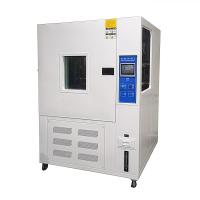
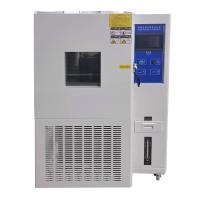
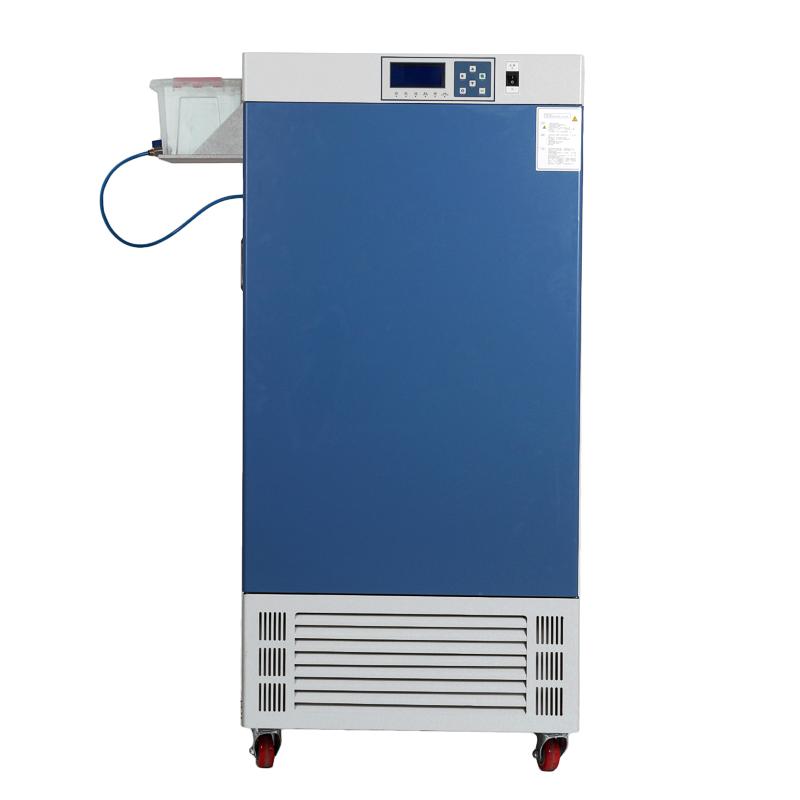
The constant temperature and humidity Test Chamber is also widely used in the heat and humidity resistance test of LED lamps. This test is to evaluate the humidity and heat stability of LED lamps by putting the LED lamp samples into the damp heat Test Chamber, controlling the ambient temperature and humidity, and testing the performance of LED lamps under high temperature and high humidity conditions.
experiment method
The general test method is as follows:
Prepare samples: collect samples of LED lamps to be tested to ensure that the samples meet the standard requirements.
Adjust the humidity and heat Test Chamber: set the temperature and humidity of the Test Chamber, usually the test temperature is 40°C~60°C, and the humidity is 90%RH.
Place the LED lamps: Place the LED lamps in the damp heat Test Chamber and let them operate under the set environmental conditions.
Observe the performance of LED lamps: During the test, it is necessary to regularly test the parameters of the brightness, color temperature, power, life and other parameters of the LED lamps to understand the performance of the LED lamps.
Record data: record each detected data and results for data analysis and comparison.
End the test: After the test is completed, the LED lamps need to be tested and analyzed to determine their humidity and heat stability.
Through this method, the moisture and heat stability of LED lamps can be quickly and accurately evaluated, and whether they meet relevant standards and requirements can be determined.