Home appliances refer to various electrical equipment used in the home, such as washing machines, refrigerators, televisions, microwave ovens, etc. These devices need to withstand long-term use and face different environmental conditions, such as high temperature, humidity, dust, etc. Therefore, home appliances need to be tested for heat and humidity resistance to ensure their quality and performance.
The damp heat test can simulate the use environment under different humidity and temperature conditions, and test the performance and reliability of home appliances under these conditions. For example, for a washing machine, the heat and humidity test can test its leakage and insulation performance in a high-humidity environment to ensure its safety; for a refrigerator, the heat and humidity test can test its cooling effect and durability in a high-temperature and high-humidity environment , to ensure its performance and lifespan; for TVs, the damp heat test can test the durability and stability of its circuits, display screens and other components in high temperature and high humidity environments.
Through the heat and humidity resistance test, the performance and reliability of home appliances can be evaluated, and their service life in extreme environments can be determined to improve their quality and performance. At the same time, the heat and humidity resistance test can also discover and eliminate potential safety hazards to ensure the safety of home appliances. Therefore, home appliances need to be tested for damp heat resistance to ensure their quality, safety and performance.
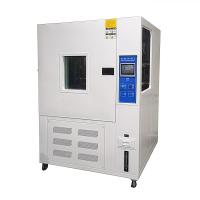
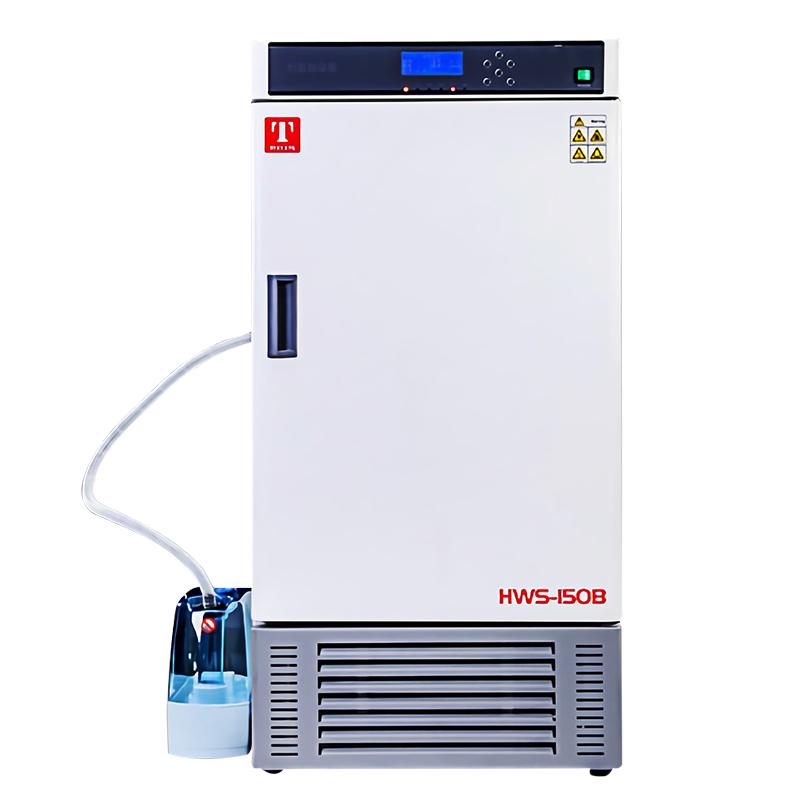
The constant temperature and humidity Test Chamber plays a very important role in the heat and humidity resistance test of home appliances. It can simulate the use of home appliances in high-temperature and high-humidity environments, evaluate their performance in harsh environments, and then guide product design and production.
experiment method
The following is a general test method for heat and humidity resistance of household appliances:
Prepare samples: prepare samples of home appliances to be tested, and pretreat samples according to standard requirements.
Set test conditions: According to the requirements of test standards, set test conditions such as temperature, humidity and ventilation speed of the Test Chamber.
Place the samples: Place the appliance samples in the Test Chamber and make sure they don't interfere with each other.
Start the test: Start the Test Chamber and start the test. During the test, parameters such as temperature, humidity, ventilation speed and test time in the box should be recorded, and checked and measured according to the standard requirements.
End of test: After the end of the test, the appliance samples are taken out and evaluated. Evaluate the state of the sample, such as whether there is oxidation, corrosion, etc., and whether the electrical performance meets the standard requirements.
In the field of home appliances, common constant temperature and humidity tests include the heat and humidity resistance tests of refrigerators, air conditioners, washing machines, ovens and other home appliances. These tests are designed to test the reliability & stability of home appliances in high-temperature and high-humidity environments, thereby ensuring their performance in actual use.
Through these tests, the quality and performance of home appliances can be improved, the failure rate can be reduced, and safety can be increased. At the same time, it can also meet market demand and improve product competitiveness.