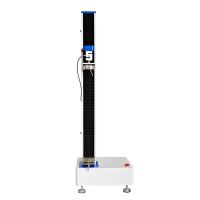
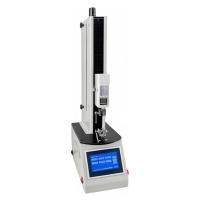
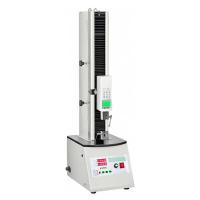
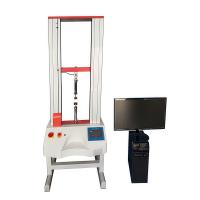
Peel strength is the core reliability index of PCB circuit board, which directly determines the firmness of the bond between the copper foil and the substrate, and affects the conductivity, anti-aging ability and service life of the circuit board. The failure of the stripping of copper foil and substrate material can lead to PCB circuit breakage, abnormal signal transmission, and even electronic equipment failure. This article combines the industry practice specifications and briefly expounds the core points of the peel strength test, including the test principle, preliminary preparation, practical process, pre-cautions and data processing, so as to provide professional reference for PCB production quality control, R&D and testing.

Test principle and scope of application
Principle - Using a universal tensile testing machine, along the bonding surface of the copper foil and the substrate, the tensile force perpendicular to the bonding surface is applied at a uniform speed until the two are completely peeled off, the maximum tensile value during the peeling process is recorded, and the peel strength (unit: N/mm) is calculated in combination with the width of the copper foil, which intuitively reflects the tightness of the two bonds.
Scope of application - It is suitable for all kinds of rigid and flexible PCB circuit boards, covering the copper foil and substrate peel test of single, double-sided, and multi-layer boards, and can be used for production process testing, finished product sampling inspection and R&D process optimization.
Preparation for testing
Equipment
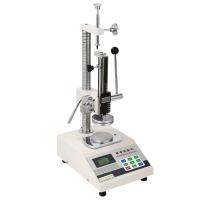
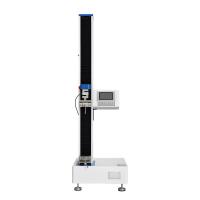
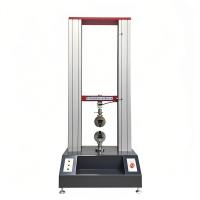
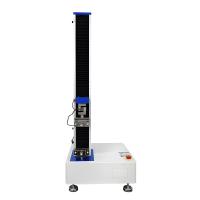
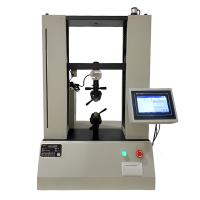
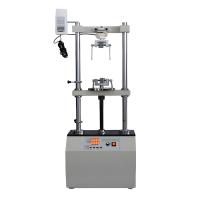
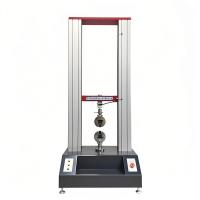
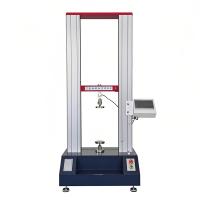
The universal tensile testing machine with an accuracy of ≥ 0.5 is selected, equipped with a special PCB peeling fixture, the load sensor is calibrated in advance, the tensile speed is set to 5-10mm/min, and the preheating is started for 10 minutes.
Specimen
≥ 5 specimens are randomly selected in the same batch and cut into 10mm×100mm specifications to ensure that the copper foil is not damaged or oxidized, the substrate is not deformed or stained, and the peeling end is pre-peeled by 5-10mm for easy clamping.
Assistive devices
Prepare alcohol, cleaning cloth, ruler, and electronic balance for cleaning specimens, measuring dimensions, and recording data.
Test the hands-on process
1. Specimen Handling: Clean the specimen surface with alcohol, measure and record the width of the copper foil after drying to ensure accurate dimensions.
2. Specimen installation: The pre-peeled copper foil is clamped on the tensile machine on the clamp, and the substrate is clamped on the lower clamp to ensure that the bonding surface is perpendicular to the tensile direction, and the clamping is firm and does not damage the copper foil.
3. Start test: clear the zero force value and displacement, start the stretching program, observe the peeling state throughout the process, and record the maximum peeling tension value.
4. Repeat and abnormal handling: complete 5 specimen tests and clean up the fixture residue; If there are abnormalities such as copper foil fracture and clamping slippage, the data should be removed and supplemented for testing.
Testing considerations
Environment: Maintain a constant temperature of 20±2°C and relative humidity of 45%-65% to avoid temperature and humidity affecting the test results;
Clamping: avoid eccentric stretching and over-tight clamping to prevent copper foil damage or force measurement distortion;
Speed: Stretch at a uniform speed, not too fast, to avoid data deviation caused by shock load;
Follow-up: Clean the fixture in time after the test to avoid residual impurities affecting the next test.
Data processing and judgment
Exclude the abnormal data, calculate the average maximum tensile force of the valid data, calculate the result according to the formula (peel strength = maximum tensile force / copper foil width), and keep 3 significant figures; Combined with industry standards or enterprise internal control standards, determine whether the peeling strength is qualified, and form a complete test report for easy traceability.
summary
This solution is concise and standardized, highly practical, covers the core points of the whole testing process, can accurately obtain peel strength data, is suitable for production testing and R&D scenarios, can provide strong support for PCB process optimization, quality control, and avoid electronic equipment failures caused by peel failure.