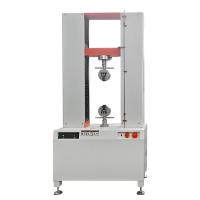
Tensile fracture is an intuitive manifestation of the material after failure under force, and its morphology is directly related to the failure mechanism. By analyzing the fracture morphology at both macro and micro scales, the essence of failure can be accurately revealed, providing support for material optimization, process improvement and service safety.
Macroscopic fracture morphology analysis
Core approach
Through the naked eye or stereo microscope, the overall characteristics such as the shape, roughness, and color of the fracture are observed, and the failure type and stress state are preliminarily judged.
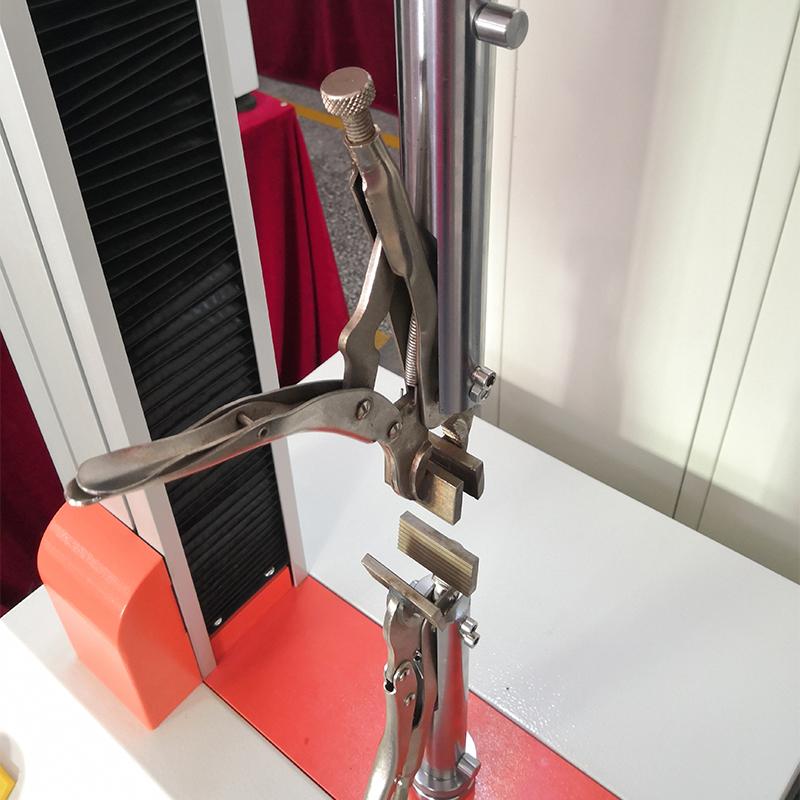
Main failure types and characteristics
ductile fracture - the fracture is cup-cone-shaped, the surface is rough and dull, and there is obvious necking; With a large amount of plastic deformation, the width of the shear lip reflects the strength of the toughness, and the wider the shear lip, the better the toughness.
Brittle fracture - no obvious necking, flat and smooth fracture, crystalline, rapid fracture, less energy absorption; It mostly occurs in body-centered cubic/densely arranged hexagonal metals, and is common in low-temperature and high-speed loading conditions.
Mixed fracture - has the characteristics of the first two, the fracture part is rough and necked, and the part is flattened; It is mostly caused by uneven material composition, internal defects or complex forces.
Microscopic fracture morphology analysis
Core approach
With the help of precision instruments such as SEM and TEM, the microscopic grains, defects and fracture characteristics of the fracture should be observed, which needs to be confirmed with macroscopic analysis to clarify the microscopic nature of failure.
The main failure types and microscopic characteristics
ductile fracture - the core feature is a tough socket, formed by microporous nucleation, growth, and polymerization; The depth and density of the tough socket directly reflect the toughness, and the deeper and denser, the better the toughness.
Brittle fracture - mainly manifested as cleavage surface and fracture along the grain; The cleavage surface can be analyzed into the pattern of steps and rivers, and the fractures along the crystal are rock sugar, which is mostly caused by the decrease in the strength of the grain boundaries.
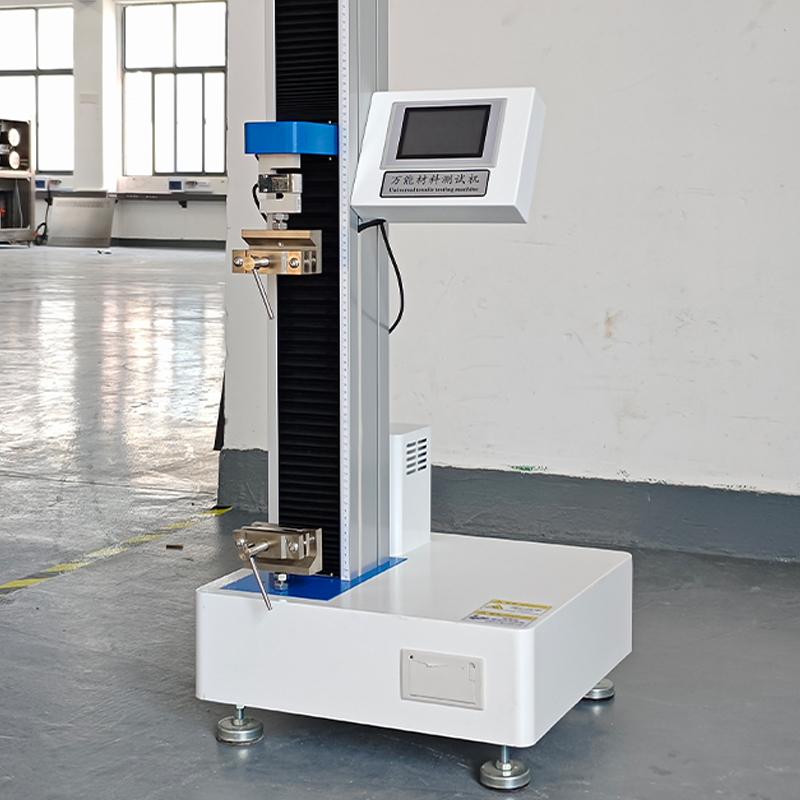
The intrinsic correlation and application value of macro and micro analysis
Correlation logic-macroscopic ductile fractures correspond to microscopic toughness characteristics, macroscopic brittle fractures correspond to cleavage/grain edge characteristics, and mixed fractures are the comprehensive embodiment of different microscopic failure characteristics.
Application value - The two complement each other, which can clarify the key factors of material failure, optimize the material composition and preparation process in a targeted manner, and improve the reliability and service life of the material.
summary
Macroscopic and microscopic analysis of tensile fracture morphology is the core means to explore the tensile failure mechanism of materials. Macroscopic analysis can quickly locate the failure type, judge the overall stress and deformation characteristics, and lay the foundation for the failure mechanism analysis. Microscopic analysis can accurately reveal the essential causes of fractures, and clarify core failure paths such as microporous polymerization, cleavage fracture, and fracture along the grain. The two complement each other, which can not only clearly explain the complete process of material tensile failure, but also provide a scientific basis for material composition optimization, preparation process improvement, and service condition adjustment, thereby improving the service reliability and service life of materials, and providing important support for the rational selection and safe application of materials in the engineering field.