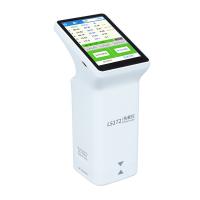
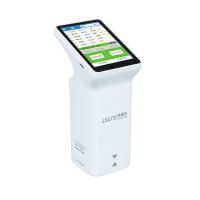
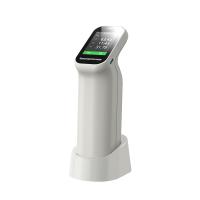
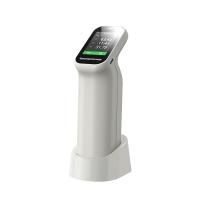
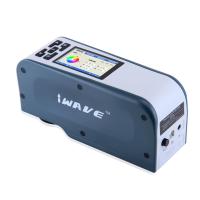
Barite powder, also known as barium sulfate powder, is a mineral commonly used in various industrial applications such as oil and gas drilling, paints and coatings, plastics and pharmaceuticals. Barite powders are often required to meet specific quality standards, including color consistency, to ensure that they are suitable for their intended use. Color difference detection is a common method to detect the color consistency of barite powder.
There are several reasons why barite powders may require color difference testing:
1. Quality control: Color consistency is an important parameter to evaluate the quality of barite powder. Due to variations in mineral composition, processing methods and impurities, color variations may occur between different batches or sources of barite powder. Color difference testing helps ensure barite powder meets required color specifications and quality standards.
2. Application requirements: barite powder is used in various applications that need to meet specific color requirements. For example, in the paint and coatings industry, barite powder is used as a pigment extender to impart certain properties to the final product, such as opacity and brightness. In this case, color difference testing can help ensure that the barite powder used in the production process meets the required color specifications to achieve the desired final product appearance.
3. Customer preference: Some customers may have specific color preferences for their products. For example, in the pharmaceutical industry, barite powder is used in the production of X-ray contrast agents, where certain color requirements may be specified by regulatory agencies or customers. Color difference testing helps ensure that barite powders meet customer color preferences and regulatory requirements.
In order to test the color difference of barite powder, various color measurement methods such as spectrophotometry or colorimetry can be used. These methods involve measuring a sample's reflectance or transmittance of light at different wavelengths and comparing the results to reference standards or established color specifications. Color difference is often expressed numerically, such as ΔE (ΔE), which represents the difference between a sample and reference color in a three-dimensional color space. Smaller ΔE values indicate smaller chromatic aberrations, while larger ΔE values indicate greater chromatic aberrations.
The color difference meter can be used to measure the color of barite powder, including parameters such as color coordinates and reflectance, to judge the color difference and color difference change of barite powder. At the same time, it can also be used to compare the color difference of barite powder produced by different batches or different manufacturers, so as to ensure the stability of product quality.

experiment method
The specific method of testing barite powder with Colorimeter is as follows:
Preparation of Samples: A representative sample of barite powder is prepared by taking a sufficient quantity of powder and ensuring that it is evenly spread and compacted to form a flat and smooth surface. This helps to minimize any variation in the measurement due to sample inhomogeneity or surface roughness.
Choice of color measurement mode: Depending on the nature of the sample and the instrument used, the Colorimeter may have different measurement modes, such as reflectance or transmittance. Select the appropriate mode according to the specific requirements of the measurement and the characteristics of the measured barite powder.
Calibration: Colorimeters are calibrated using standard calibration references to ensure accurate and reliable measurements. Calibration helps account for any changes in instrument performance, such as source intensity, Detector sensitivity, and wavelength accuracy.
Measurement: Then use a Colorimeter to measure the reflectance or transmittance of the prepared barite powder sample at different wavelengths of the visible spectrum, usually 400 to 700 nanometers. The instrument quantifies the amount of light reflected or transmitted at each wavelength, which is used to characterize the color of a sample.
Calculation of color difference: The color difference meter calculates the color difference between the measured sample and the reference standard or established color specification. This is usually done using mathematical algorithms based on a color space, such as CIE Lab* or CIE LCh*, where L* represents lightness, a* represents the red-green axis, b* represents the yellow-blue axis, and C* represents chroma (saturation) , h* represents the hue angle.
Reporting of results: The color difference meter provides a numerical value of the color difference measurement, usually expressed as ΔE (ΔE), which represents the color difference between the sample and the reference. Smaller ΔE values indicate smaller chromatic aberrations, while larger ΔE values indicate greater chromatic aberrations.
It is important to follow the manufacturer's instructions and established test procedures for the particular Colorimeter used, as different instruments may differ in their measurement principles, calibration procedures, and methods of data analysis. The importance of proper sample preparation, instrument calibration and measurement technique to obtain accurate and reliable barite powder color difference measurements cannot be overemphasized.